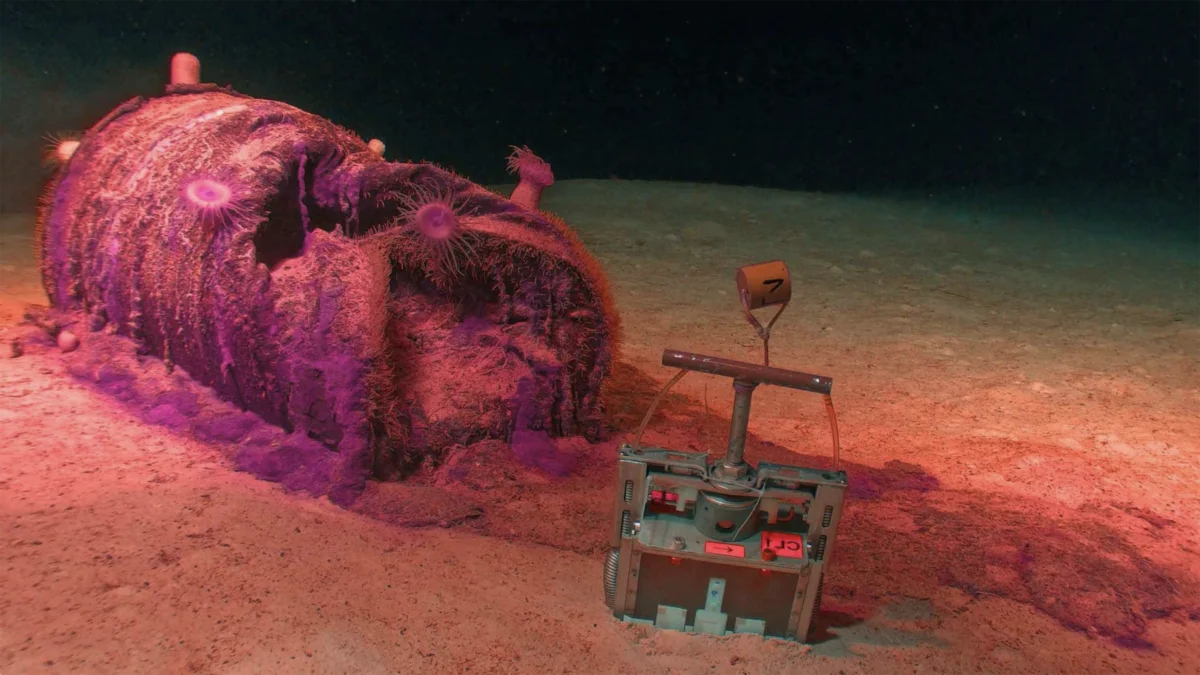
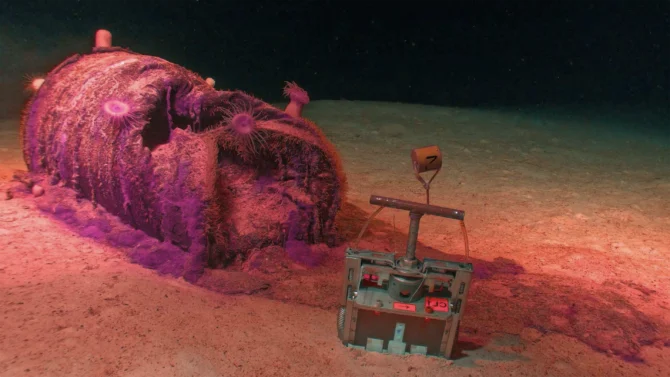

We humans create a lot of trash. Endless amounts of it, really. In our quest for more and more comfort, yes, we’ve made our lives easier, but much, much dirtier. In the Northeast Atlantic, nearly three miles below the surface of the ocean, we’ve dumped barrels of radioactive waste. And those barrels are leaking.
According to reports, that particular area of the ocean hasn’t been treated well. In the back half of the 20th century, nearly 250,000 barrels were simply tossed overboard and forgotten about. They weren’t even meant to be permanently safe vaults, although there was never a clear plan on how to remove them. During the post-war years, the barrels were filled with concrete and waste material in an effort to safely dispose of their contents. They were expected to slowly corrode over the decades, slowly releasing and dispersing throughout the ocean. The solution to pollution, as they say, is dilution.
From May 27 to June 28, 2026, a French research vessel carrying French and international scientists decided to take a peek around down there at depths of over 15,000 feet. Using a manned submersible named the Nautile, they got an up-close-and-personal look at the barrels.
Although researchers were aware of their existence, the depth made it difficult to really get a good understanding of how the barrels of toxic waste were holding up. Although at first glance those inky black depths may appear lifeless, they are most certainly not. Living around a quarter million leaky radioactive barrels is not a great thing, and plenty of microbes, fish, and invertebrates are eeking out a life down there among those corroded storage containers.
When the researchers hit their depth, they were able to see that several of the barrels were “in an advanced state of deterioration.” They were also able to document some of the material that was leeching out of them into the mud they lay in.
Using specialized instruments that can detect radionuclides, they found, as you’d expect, high levels of Cobalt-60, niobium-94, Cesium-137, americium-241 in the mud and water, but they hit a bit of a snag.
The latter two isoptopes are found after a nuclear weapon has detonated. Since those isotopes take a ridiculously long time to break down, it makes pinning down exactly where they came from difficult. But samples collected from the barrels in 2025 did have traces of americium-241, so it’s fairly safe to assume that the barrels are leaking it.
So what does that all mean for the animals living around the toxic waste dump we created? Well, it’s tough to say for certain.
“For now, the results support neither a final ecological risk estimate nor an all-clear,” wrote Earth.com. “What researchers finally have is something that has been missing for decades. A close look at what is actually happening around these forgotten barrels.”