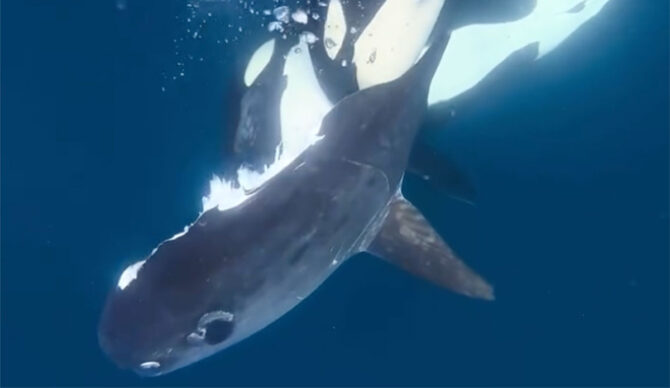

Orcas are amazing animals. Known by some as the apex predator of the ocean, they are incredibly smart. So smart that they are well known for their complex and highly effective hunting techniques. One of the most recent — that we’ve noticed, anyway — is the curious tendency to ram sunfish so hard the sunfish is blown to bits.
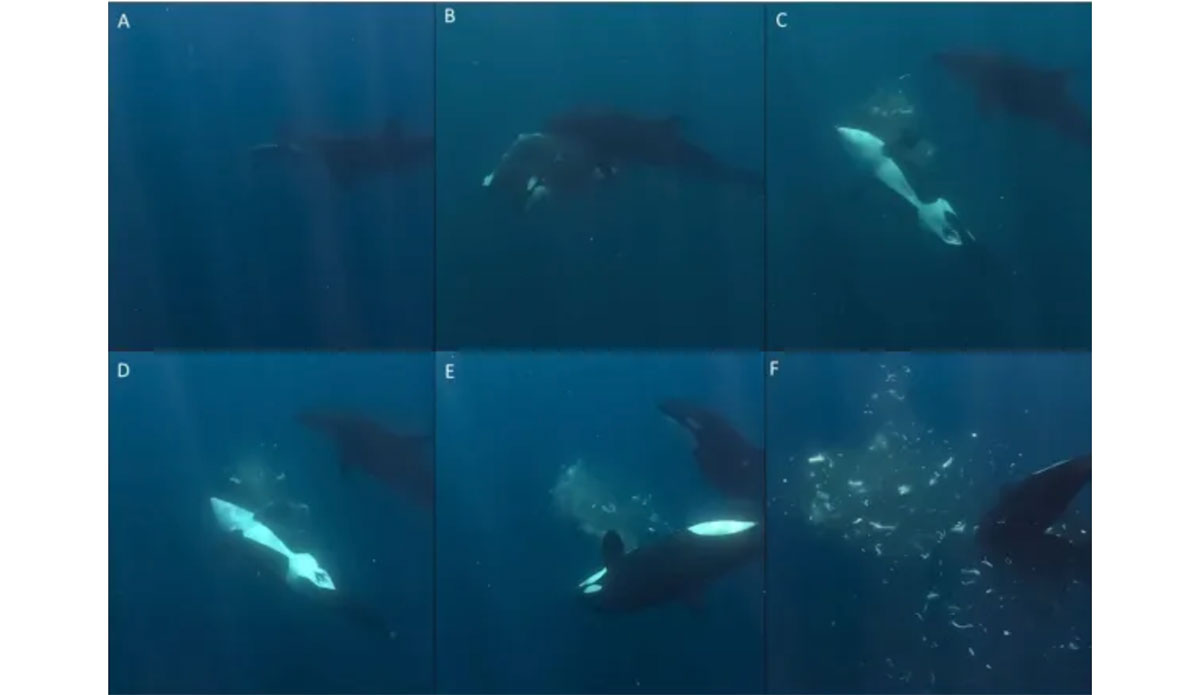
In mid-July, a clip of an orca doing just that made the internet rounds. It’s a fascinating watch that was filmed in July of 2024 by Dr. Kathryn Ayres, a scientist at the non-profit organization Beneath The Waves. An orca holds a dead sunfish in its mouth as a second powers towards it, gathering speed as it does. Right before the second orca reaches the sunfish, the first one lets it go and seems to watch (with amusement, if I may anthropomorphize for a second) as the second barrels into the sunfish and smashes it to smithereens. Then a juvenile whale can be seen eating the pieces.
This was not the first time the strange behavior had been seen, but it made researchers take a closer look at it. They found reports dating back to 2021.
“We think this may help younger orcas feed more easily or it could also just be for fun,” Dr. Ayres told The Guardian. “Orcas are known for playing with their food.”
View this post on Instagram
Orcas are indeed known for playing with their food, as well as just doing weird, goofy things like wearing salmon hats. On the less goofy side of things, they’ve also been known to kill great whites and eat only the livers, as well as attack boats.
The first time one researcher saw the sunfish-ramming behavior, she was baffled.
“The first time I witnessed this behavior was in December 2021, and in that moment, the sheer energy of the impact was stunning – seeing an apex predator hit a massive fish with that much velocity was breathtaking,” marine biologist Erick Higuera Rivas of Conexiones Terramar in Mexico told ScienceAlert. “We immediately knew we were witnessing something highly unusual because of the scale of the tissue explosion.”
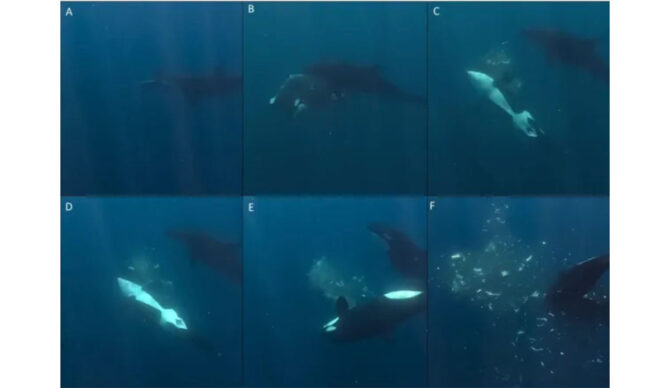
Since then, the brutal sunfish killings have been seen at least twice more, once in 2024 and once last year. When scientists examined all the footage, they found a highly coordinated tactic that didn’t really answer the most pressing question: why are the orcas doing this?
“I never imagined this could be the hunting method orcas would use against defenseless prey that posed little risk to the predator,” marine biologist Erick Higuera Rivas said. “Initially, upon seeing a high-speed ram, our instinct leads us to assume it is the killing blow intended to incapacitate a moving target.”
But once they looked closer, they realized that the sunfish were probably dead already, and that “their nutrient-rich internal organs (viscera) had been removed before impact.”
So why work so hard to demolish prey that’s already dead? It’s likely because of how a sunfish is built. Although they are slow and can grow to huge sizes, their bodies are tough. Really tough.
“Sunfish skin cannot be cleanly unzipped. It is an incredibly dense, waterlogged shield of collagen,” Higuera Rivas explained. “Instead of using tension to rip it, the orcas use massive kinetic energy. While one orca immobilizes the prey, the hitting orca uses its multi-ton body as a high-speed projectile, delivering an impact that shatters the dense collagen framework into manageable fragments.”
Once the whole fish has basically been reduced to bite-sized pieces, making the most of the catch is a hell of a lot easier. Instead of ripping through all that hard, rubbery flesh, they simply blow it up.
Since sunfish are both huge and slow, they may also be an easy creature for juvenile whales to train with.
“Orcas are highly encephalized predators that frequently engage in object manipulation and play behavior with their prey,” Rivas explained. “Because sunfish are slow-moving and defenseless, they present a low-risk opportunity for the pod – especially subadults – to practice strike precision and reinforce social bonds.”
Although it’s not quite confirmed just yet, if and when it is, it will be added to the list of hunting practices that are passed down through generations of whales.