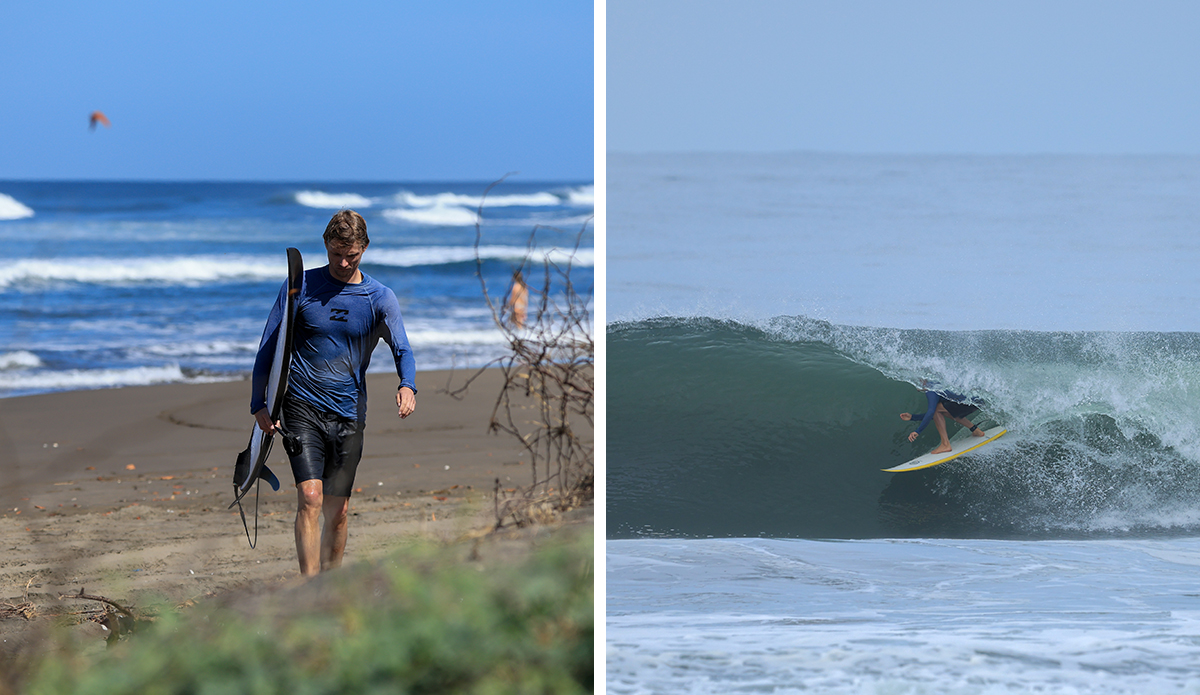

I’d been badgering my surfing buddy for years about a trip to northern Nicaragua, but he could not be convinced. While I was drawn to the off-the-beaten-path, purportedly uncrowded lineups of the north depicted online, he was pulled to the classic round-the-clock offshore winds of the south.
“Why would I go somewhere where the wind turns onshore, when I can go to the south and surf offshore all day?” he’d ask.
I hadn’t been to Nicaragua in more than a decade. I’ve had a preference for exploring new areas, usually less-visited surf venues around the world. But when this friend, bent on returning to the offshores (and crowds) of southern Nicaragua, gathered a group of friends to go this summer, I caved. But later, after some additional thought, I put forth a counterproposal.
“How about we do a week in the south, and then a week in the north?” I said. “Then we can compare.”
His initial hesitancy faded when we were invited to stay at Amaru Surf and Yoga Resort, just steps away from the notorious, sand-bottom barrels of The Boom. We ate the fees to change our flights and departed California for a two-week surf experiment split between the north and south.
Where are the waves?
I have two boards in my San Francisco quiver that I deemed serviceable for the punchy tubes that I would presumably find in Nicaragua: a 5’10’’ JS Raging Bull and a 6’6’’ step-up, in case the surf got serious. The third board in my quiver I’d left up to the forecast — another tube-shooter to prepare for the inevitable board destruction, or a groveler if we were going to have small days.
As the departure date for our trip neared, those early-summer south swells that had been lighting up the Pacific basin were nowhere to be found.
“Is it possible to get ‘two-to-three’d’ for an entire surf trip during peak swell season?” I texted my friend with a screenshot of the forecast. The first week of the trip looked pretty abysmal, the opposite of a strike mission if there is such a thing. I decided to throw a beefy, 5’7’’ fish into the board bag to prepare for some suboptimal surf.
Our group of four rented a two-bedroom house in the gated community of Hacienda Iguana, where guests have the privilege of access to Playa Colorado. Perhaps the most famous beach in Nicaragua (somehow still devoid of Surfline cameras), Colorados is synonymous with barrels. Just weeks before, I had seen local surfers posting clips of their stand-up tubes.
But the sand bars at Colorados, and all around Central America for that matter, had significantly shifted after Tropical Storm Cristina slammed the region in early June. The dribbling swell was dumpy and closing out at low tide, and complete shorebreak at high tide. The famous offshore winds of the south were tilting sideshore and furious, tossing you out of the wave if too much of your board caught the breeze.
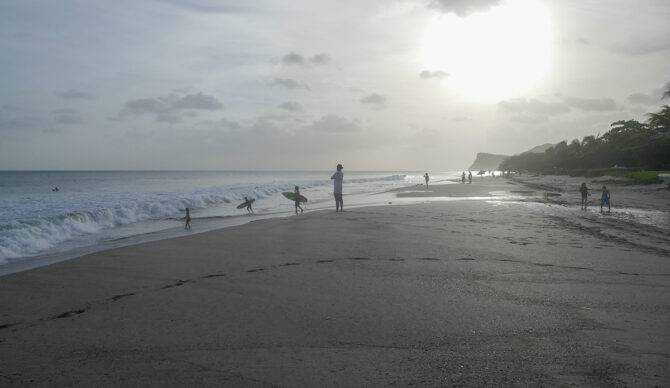
There were brief windows of surfable sessions during the rising and dropping tides, but those windows were crowded and still mostly closeouts. The occasional set wave, which only one or two surfers would be lucky enough to get, teased at what the beach was capable of. But for most, they were elusive.
Even with Colorados at our doorstep, we ended up surfing more at a less-than-inspiring reef down the beach. The surf was fun, a tropical version of La Jolla’s Windansea, but not what you have in mind when you travel to Nicaragua searching for barrels.
After a week in the south, I had amassed a total of zero tubes and several head-dips. We had simply struck out on the forecast. While I couldn’t complain about the privilege to be on a tropical surf vacation catching up with old friends, I hoped that we would have better luck in the north.
Introduction to The Boom
As I exited the air conditioning of our taxi, the heat of northern Nicaragua felt like stepping onto a new planet. The offshore winds that cooled us off in the south were absent.
After the subpar week at Colorados, our expectations remained low. The forecast for the next week wasn’t a whole lot more inspiring. But I was optimistic. The Boom, a two-mile stretch of beach near the town of Aposentillo, the epicenter of surfing in the north, amplifies smaller swells.
As we sat for our first supper at Amaru, I inquired with other guests about the conditions. It had been small there, too, but a modest pulse in southwest swell promised pretty fun waves over the next few days, they told me.
At first light the following morning I walked down to The Boom with my shortboard and step-up, preparing, and hoping, for surf big enough to snap a board. Tropical Storm Cristina had rearranged the sand bars there, too. You could see how the storm surge ripped apart the beach, leaving a large berm on the edge of the vegetation.
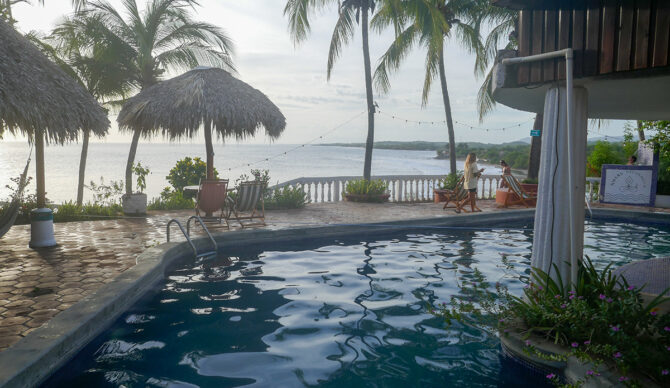
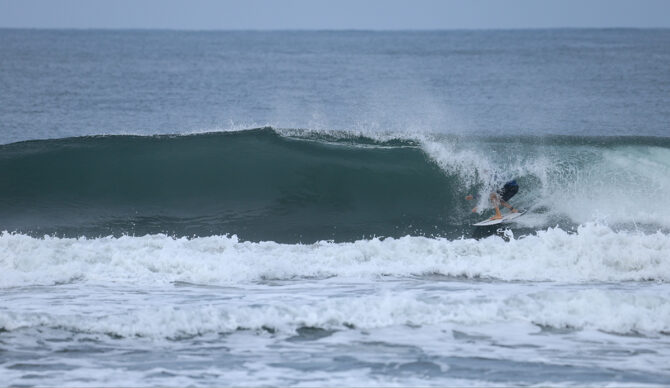
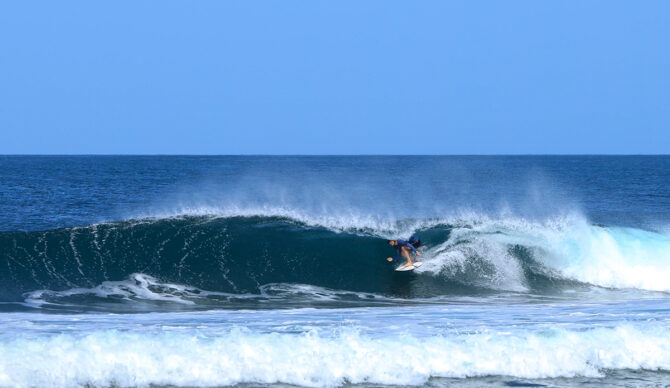
But the first look at the surf already had me more excited than anything I’d seen the previous week in the south. The waves were not the perfect feathering A-frames that I had seen in videos, more like a puzzle to be solved. Against a backdrop of humming cicadas, the lineup was dominated by closeouts. But sprinkled among them were makeable, human-sized tubes, spitting left and right for those with the patience and positioning to find them.
I couldn’t remember the last time I had surfed a wave where I could consistently expect a barrel, and my form probably showed — not taking off deep enough, my feet too far back, my line too low, or my balance not prepared to fight through a chandelier.
Day after day we’d paddled out with the Amaru crew — including pro surfer Tim Bisso and his wife Elle, who also shreds. They’d fallen in love with The Boom the year before and came back for another prolonged stay.
I packed a lot — dozens and dozens — of closeouts. And after getting comfortable with the wave and repeated brawls with the sandbar, I started to figure it out. First one barrel made, then a deeper one, then a bigger one. There were diamonds in the rough, and, despite the existence of a whole variety of waves in the area, our days became singularly focused on getting tubed at The Boom.
Someone in the south had told me The Boom “was the easiest wave to get barreled,” and I could see why. Getting barreled is never exactly easy, but the takeoffs were relatively forgiving, and, when the morning offshores were blowing, you knew that every wave was going to barrel. Even as locals said it was far from perfect, there were tubes to go around.
The verdict
“So now that you’ve been to the south and the north, which one would you come back to next time?” a fellow guest asked.
“Colorados for sure,” my surf travel buddy declared. He was still raving about the offshores that allow you to surf all day, and had seemingly erased his memories of the week prior.
I almost spit out my coffee, cracking up. Acknowledging that we got unlucky with the forecast, for me, it was a tale of two trips.
I didn’t get a single memorable wave in the southern leg of the trip, but at The Boom, I had several tube visions burned in my mind. And while The Boom is no longer a secret, the crowds were far more spread out and manageable than the hordes of Southern California surf groms at Colorados being filmed by their dads.
As I returned to San Francisco, day dreaming about the shade of an 85-degree tube, boards still covered in tropical wax, my answer was clear. Colorados may be Nicaragua’s most well-known wave, but I connected with the waves (and life outside the gated community) of the north.