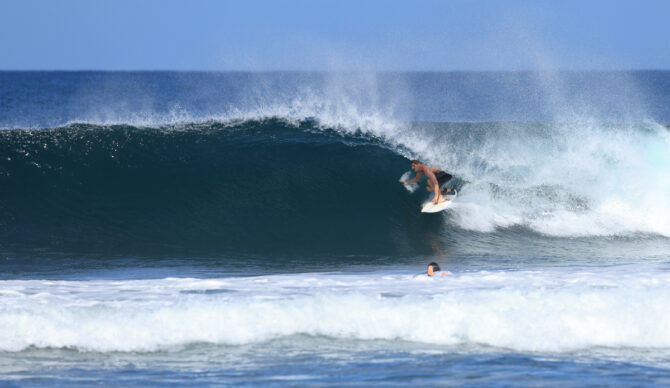

When Gerritt Cooper first stumbled across the hollow, empty beach breaks of northern Nicaragua, he knew he had found something special. He’d ridden waves all around the globe — from Hawaii to California, Mexico to Chile — but the empty lineups, sand-bottom tubes, and plethora of breaks made the village of Aposentillo different.
After several years of working in Nicaragua as a permaculture gardener and surf camp manager, he received an offer he couldn’t refuse: the chance to co-found a surf and yoga resort and permanently call Nicaragua home. Amaru Nicaragua was born.
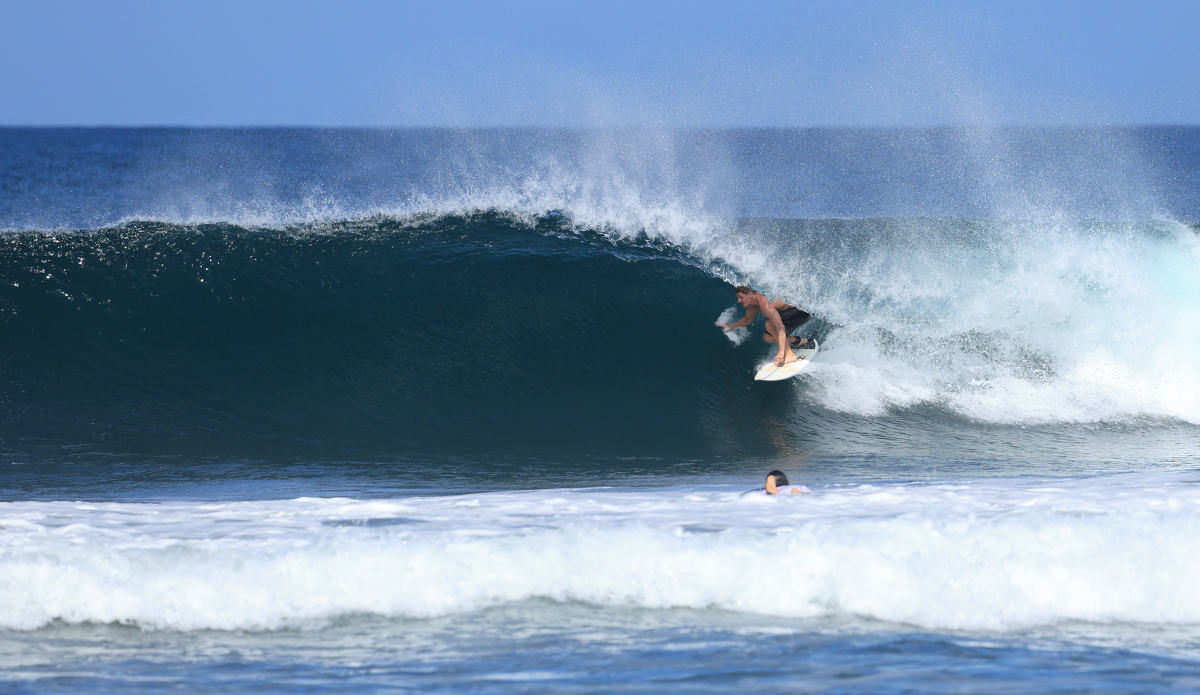
While the iconic offshore winds of Nicaragua’s south funneled traveling surfers to breaks like Colorados and Popoyo, Cooper saw untapped potential in the less-traveled north. The Boom, the main stretch of beach in town, consistently produced powerful, A-frame barrels with only a fraction of the crowds. And 20 other waves within a 15-minute drive provided endless variety, from beginner to expert, points to reefs, turns to tubes, and waves that cannot be mentioned or photographed.
“I started to realize what makes this area so unique is its location,” Cooper, 37, said. “Obviously, the Boom is what puts this place on the map for advanced surfers looking for that barreling wave. It’s a very accessible wave for intermediate, advanced, or expert levels — a lot of frequency. But there are other waves like The Boom, which work on low tide, bigger swell, or smaller swell.”
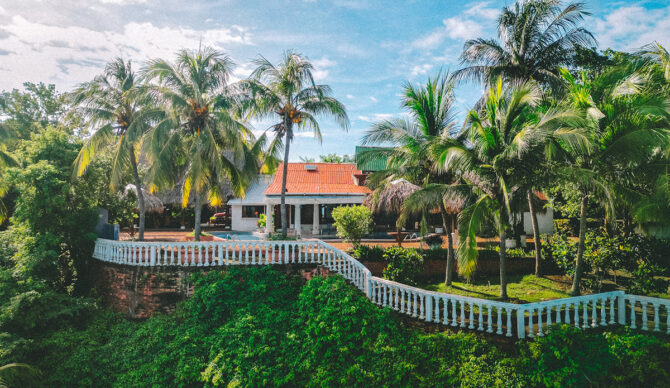
At first, Cooper felt conflicted about opening up his favorite spots to visitors. Plus, as an entrepreneur, he’d have to compete against businesses owned by friends, and was concerned about how it would be viewed by the local community he’d spent years becoming part of.
But Cooper identified an opportunity to help shape northern Nicaragua’s emerging surf tourism sector. It was a chance to give back to the community by teaching the spirit of aloha and surf etiquette he learned in Hawaii, while leveraging his deep ties to the village to create opportunities for others. Through Amaru, he partnered with conservation groups to protect the region’s mangroves and sea turtles, improved garbage collection, and sponsored local children to attend school and participate in sports.
Amaru launched in 2021 and has consistently grown year over year. Today, the resort fills up with surfers of all skill levels, including pros like Yadin Nicol, Alyssa Spencer, and Tim Bisso.
View this post on Instagram
Several decades ago, the Boom was a barren beach of unridden waves. Even just eight years ago, Cooper says he consistently paddled out with just a handful of surfers. Since then, more surfers have shown a preference for Nicaragua’s north, and the Boom has become a well-known destination to get barreled.
The increase in visitors reflects a broader trend across the region. According to Cooper, for many local businesses — whether accommodation, scooter rental, restaurants, photography, or well-being — surf tourism now funds 100 percent of operations.
But as more surfers discover Nicaragua’s north, the communities are bracing for change. They know what unchecked growth did in places like Bali, Sayulita, and Nosara. Cooper wants to learn from history so Aposentillo avoids the mistakes other surf towns have made.
The Boom has been spared from major developments. The accommodations are set back on the beach, giving the sand room to recede with storms. A jungle and mangrove estuary still dominate the backdrop as you bob in the lineup for waves. But Cooper knows it’s only a matter of time before larger developers set their sights on the area’s growing barrel economy.
“I can’t change the idea of a big developer and how he wants to try and make millions,” said Cooper. “But I can help set up a conversation with them like, ‘Hey, what if we protect the estuary? How can we set up trash infrastructure? Can we build at least 200 meters from the beach? What about septic?’ Hopefully the people who want to buy land are cut from the same cloth.”
“If there is future development, I would hope that person recognizes the importance of the natural ecosystem and how that protects the waves,” Cooper added.
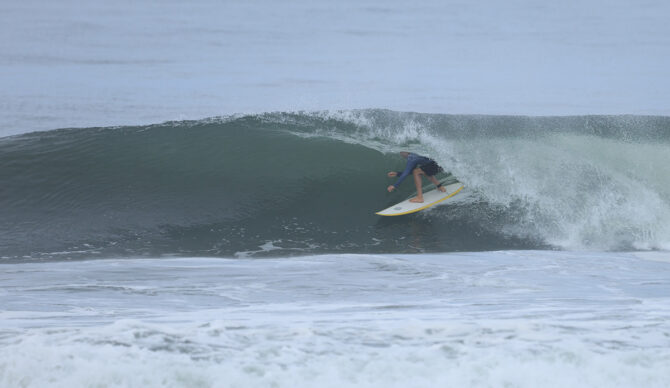
Amaru has successfully converted many travelers who decided to give Nicaragua’s north a shot. For many, year after year, they keep coming back for the rustic experience and abundant surf, far from highrises and ATMs. And, according to Cooper, there is still more surf exploration to be done on remote sections of the coast.
“I’ve been on a lot of surf trips where I’ve gotten skunked, like literally flat, bad winds,” Cooper said. “The cool thing about Amaru is we will get you good waves. There’s so much diversity — more exposed, less exposed spots.”
“You’re going to have a great time no matter what,” he concluded. “Even if the winds are off or it’s not that picture-perfect day at the Boom, there are so many other elements — the yoga, the food, the vibe. People come back a lot to this area because of that, no matter what your level is.”
While the Boom originally drew Cooper to Northern Nicaragua, it’s the legacy he’s building in the region’s surf tourism that has kept him there. If you stay at Amaru and spend time with him, you’ll get to see for yourself what makes the area so special.