
Jon Krakauer’s book Into Thin Air, a personal account of one of the deadliest days ever on Everest, is the most widely read piece of literature on the world’s tallest mountain. His look into the complex chain of events that killed eight climbers sold millions of copies. While Krakauer used his fame to launch other best-sellers outside of the climbing world, now and then, he’ll return to writing about Everest, and his insight is always gold.
Krakauer recently emerged from semi-retirement and penned a piece in The Atlantic about the world’s highest mountain as peak climbing season gets underway and hundreds of people spend tens of thousands of dollars to wait in line for a photo-op on top of the world.
The mountain has drastically changed since Krakauer achieved the feat in ‘96, and in the article, he lays out the biggest differences.
The effects of Into Thin Air
Krakauer thought that the horrors and deaths described in Into Thin Air would deter others from climbing the mountain. But he says he couldn’t have been more wrong about that.
The book turned into a Hollywood film and brought hordes of people to the mountain who were willing to take their chances — attracting them like “gamblers to a slot machine.”
“The owner of one of the prominent guiding companies told me that Into Thin Air was better advertising for his business than anything he could have imagined,” Krakauer wrote.
Everest is way safer
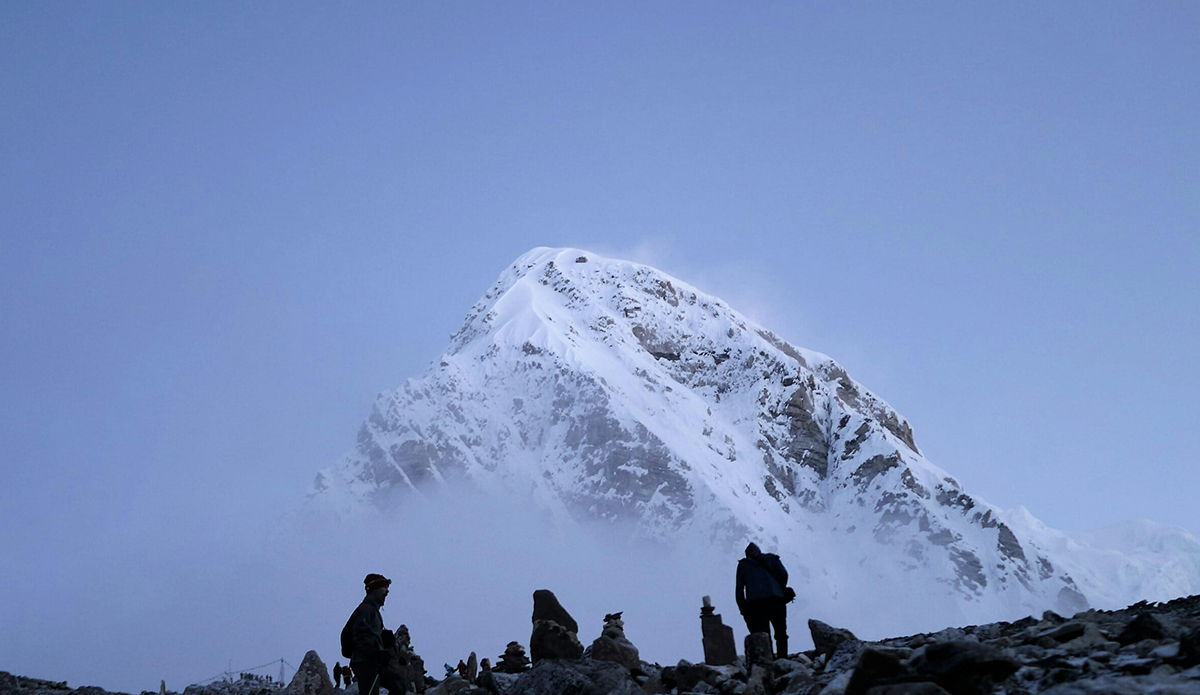
Most of the viral content that comes out of Everest these days shows traffic jams on treacherous ridges in the oxygen-deprived “death zone” — altitudes over 8,000 meters (26,242 feet) where prolonged exposure is particularly dangerous for humans.
But, according to Krakauer, advancements in safety in other areas have offset the risks that crowds present. He says that better weather forecasts, more reliable oxygen masks, and as many oxygen canisters available as you are willing to pay for have significantly reduced the death tolls since his 1996 expedition.
To support his claim, Krakauer provides some statistics: From 1921 to 1996, one person died for every five who reached the summit. Since 1996, that ratio has been reduced to one death in 28 summits, despite the complications of thousands of more people on the mountain each season.
The Sherpas are taking over
When Krakauer climbed Everest, most of the technical experts and tour company owners were Americans or Europeans. But, in recent years, the Sherpa ethnic group indigenous to the Himalayas has taken more control of the summit expeditions.
Today, Krakauer says Sherpas have earned the respect they deserve, making up a majority of the expert guides employed on the mountain. Plus, more than half of the expedition companies are Sherpa-owned.
“No longer do Nepalis primarily function as kitchen workers and load carriers,” Krakauer said. “They are now frequently the most skilled and accomplished guides on the mountain.”
An Everest summit is losing its sparkle
Even when Krakauer climbed Everest, technological advancements were making it easier for inexperienced climbers to reach the top. He even attributes some of this inexperience to factors that played a role in the deaths of climbers in the 1996 tragedy.
But in the article, he says that an Everest summit has become so accessible that it no longer holds the prestige that it once did.
“Climbing to the highest point on Earth is still an adventure that entails considerable risk and typically requires weeks of immense effort,” Krakauer said. “But the commodification of the mountain has stripped away much of what once made climbing Everest such a uniquely profound experience.”
He does, however, note that there is still danger and climbers die every year — and remote, challenging routes still exist for the risk-takers. But he doesn’t blame climbers for taking the traditional, safe route, especially since he’s experienced the calamities that can unfold firsthand.