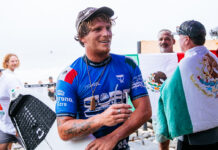
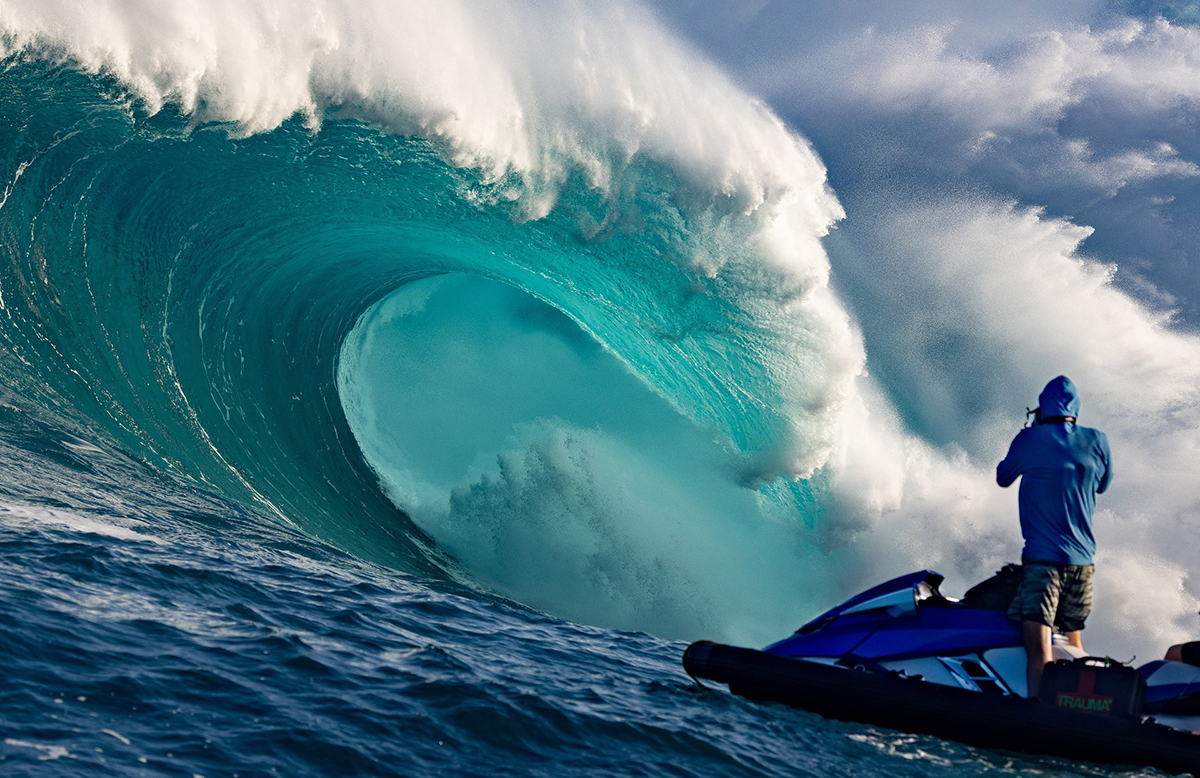

Fred Pompermayer. If you’ve ever read a photo credit, that name should ring a bell. Fred’s work has been featured in a who’s who of your favorite magazines and websites, from The Inertia to National Geographic to Surfline. If the surf is huge and heavy, Fred is there to capture it. Some might call him one of the preeminent surf photographers of our time. But the Brazilian has come a long way to earn the life he leads. Fred took the leap of faith, crafting his dream life after realizing that the world of architecture wasn’t his cup of tea.
I sat down with Fred to hear his story, and learn more about his life behind the lens.
How did where you’re from influence your eye for art in nature?
I grew up in Brazil and always loved the outdoors. I lived in an artistic household, my father owned a framing shop and was surrounded by artist friends. My sister was an artist from a young age, eventually earning a master’s degree in arts and has continued to work in that field until now. My artistic vision came naturally to me, I was born that way.
At the same time, I’ve always had a strong sense of adventure and curiosity. I was constantly drawn to challenges, especially in nature and action sports. Growing up, I lived four hours from the ocean, but I was obsessed with surfing. I collected surf magazines and was a total surf fanatic. That mix of art and adventure is what shapes the way I see and capture nature today.
Where do you live now? (Is it true that Los Angeles has the prettiest lighting for photography in the world?)
I live in El Segundo, California. I haven’t really heard that Los Angeles has the prettiest lighting in the world, but during winter, when the sun sits lower in the sky, we get incredible color patterns along the coast.
Autumn is my favorite time, it’s when I like to focus on creating fine art abstract photography, exploring textures, contrast and colors while shooting in the water right in my “backyard.”
I hear you worked as an architect before sending the whole surf photography thing. How did you work up the nerve to finally chase your dream?
During my last semester of college in 2001, I took a year off to come to California to surf. That year was intense. I traveled the entire coast from San Francisco down to Baja California Sur, and I had the opportunity to extend the trip to Indonesia and Hawaii.
After that, I went back to Brazil, finished my degree, and started working at an architecture firm. But it didn’t take long for me to realize that my real passion was in the ocean and photography, and I wanted to fully commit to becoming a surf photographer.
What was it like at first and how long until you started gaining traction?
It definitely took time to get established. My first big break was a publication in a Brazilian magazine, HardCore, a double spread on page 10, which was reserved for the “photo of the month.” I was so stoked, and it gave me the confidence to believe I had more to offer.
After that, I started landing shots in magazines around the world and eventually scored several cover images and Big Wave Awards. That momentum kept the fire going, but in the meantime, I was still working side jobs in Los Angeles to pay the bills.
It probably took around 10 years before I was able to fully sustain myself financially as a surf photographer.
What advice would you give to people who are on the fence about chasing their dreams?
Give it 110 percent and stay consistent. The journey takes time, so don’t expect fast rewards. Do it because you truly love it, not for the money; money is a consequence of good work.
Passion is what keeps you going through the ups and downs, and in the long run, being happy doing what you love is what makes it all worth it.
I read somewhere you design your own camera housings for in-water shooting. Run me through that process. Spare no details for our gear nerds, myself included.
It started back when I transitioned from analog to digital and needed a new water housing. At the time, everything on the market was really expensive, so I decided to build my own. It took a while to understand the process and source the right materials and hardware, but eventually my first prototype worked.
I’ve always believed it’s important to experiment with different cameras and lenses to truly understand the possibilities and perspectives. As my ideas evolved, I often had to adapt my equipment. For example, when I wanted to shoot flash photography in the water, I couldn’t find anything that met my needs, so I built my own flash housings from scratch that let me create some unique and incredible images.
Big wave photography brought another set of challenges. I needed a housing that was extremely lightweight, easy to control, and allowed quick access to zoom, so I used carbon fiber with aluminum. I also designed custom handles so I could securely hold the camera while driving a jet ski.
What’s your favorite wave to shoot? And how does the process change whether you’re shooting on land versus in the water?
I don’t really have a single favorite spot. Whether I’m using a long lens from the land or shooting in the water depends on the situation, my ideas, and the conditions. Sometimes I use a long lens to create something more artistic or to compress the background for a dramatic effect.
Shooting in the water is always fun because you’re in direct contact with nature. It lets you explore angles and perspectives you just can’t see from the land, which often leads to more unique and immersive images.
How do you adapt to the conditions in heavy surf?
Adapting to heavy surf comes from years of experience, preparation, and a deep respect for the ocean. I’ve always been fascinated by big waves. I grew up listening to stories and studying images of surfers pushing themselves in extreme conditions. That curiosity naturally led me to the big-wave community, where I feel I belong.
Over time, I’ve learned to read the ocean and understand swell size, direction, wind, tides, and how a break behaves under heavy swell. You have to stay flexible, aware, and ready to make quick decisions, while trusting your equipment and your team. Every session is different, so adapting means constantly observing, adjusting your position, and knowing when to push and when to hold back.
What was your gnarliest wipeout or experience while shooting?
Years of shooting have given me a deep understanding of risk management and how to avoid worst-case scenarios. I always make a point to study the conditions and identify potential hazards before heading out. That said, I’ve still had a few close calls – like the time I fell off the Jet Ski and had to be rescued just seconds before a set rolled through the bowl at Maverick’s.
What shot are you most proud of and why?
There are a few special photos that I like but the one from last season at Maverick’s I’m really proud of, where I captured Peter Mel on what ended up being the biggest day ever recorded there. That image went on to win Photo of the Year at the Big Wave Challenge, which made it even more meaningful for me.
What makes this shot special isn’t just the recognition, it’s the experience behind it. I put myself extremely close to the action, to capture the true intensity and scale of the wave. It was one of those moments where everything came together: timing, positioning, and instinct.
For me, the photo speaks for itself. It captures not just the size of the wave, but the raw energy and emotion of that day.