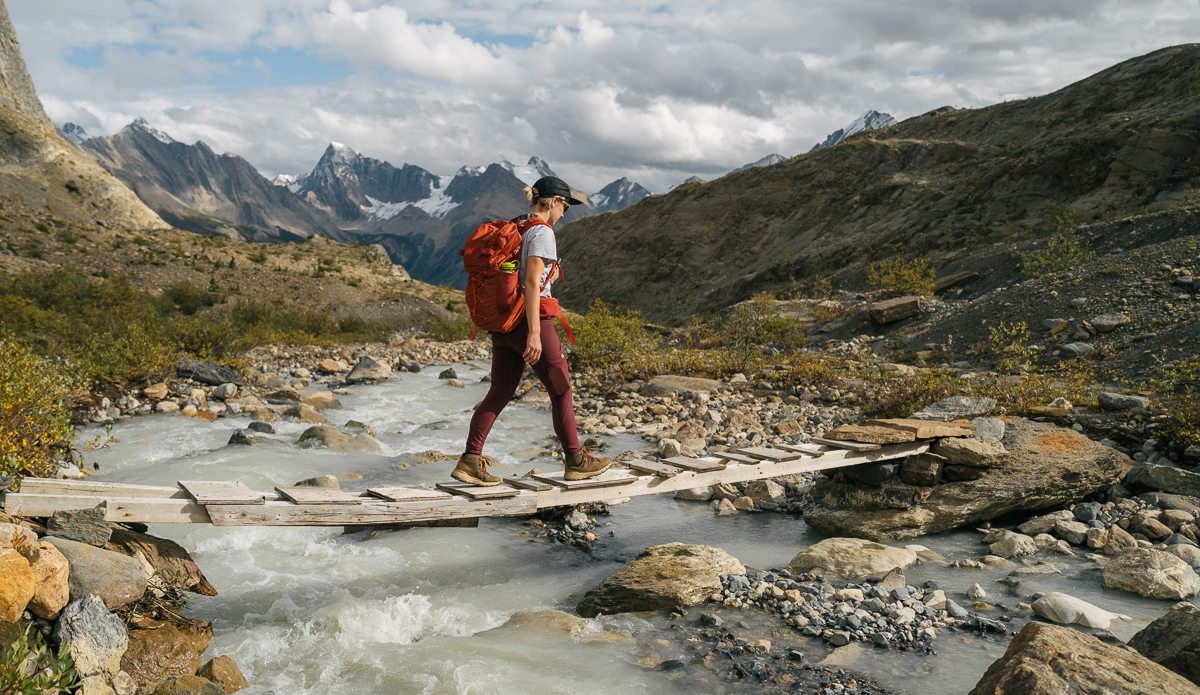


Hiking is our jam. And we’ve learned from experience that what you wear on your feet can make or break the experience. Like many hikers, we’ve worn ill-fitted hiking boots that result in blistered and achy feet. But we’ve also tried some of the best hiking boots for women. The latter are equal parts comfortable, supportive, and — dare we say — stylish. Over the past year, we’ve tried many of the top-rated women’s hiking boots from some of the best brands to save you trouble (and blisters). After logging dozens of miles in each, we’re confident in our recommendations.
Navigate To: Comparison Table | How We Tested | Buyer’s Guide
Related: Best Hiking Boots | Best Women’s Hiking Shoes | Camping and Hiking Reviews
Editor’s Note: We updated this guide in April 2026, removing some discontinued picks and updating links and prices across the board ahead of the summer season.
The Best Women’s Hiking Boots of 2026
Best Overall Women’s Hiking Boots: La Sportiva TX Hike Mid GTX
Runner-Up Best Women’s Hiking Boots: Hoka Kaha 3 GTX
Best Value Hiking Boots for Women: Merrell Moab 3 Mid Waterproof
Best Recraftable Women’s Hiking Boots Danner Mountain 600 Leaf GTX
Best New Boot We’ve Tested: The North Face Offtrail LT Mid
Best Overall Women’s Hiking Boots
La Sportiva TX Hike Mid GTX ($209)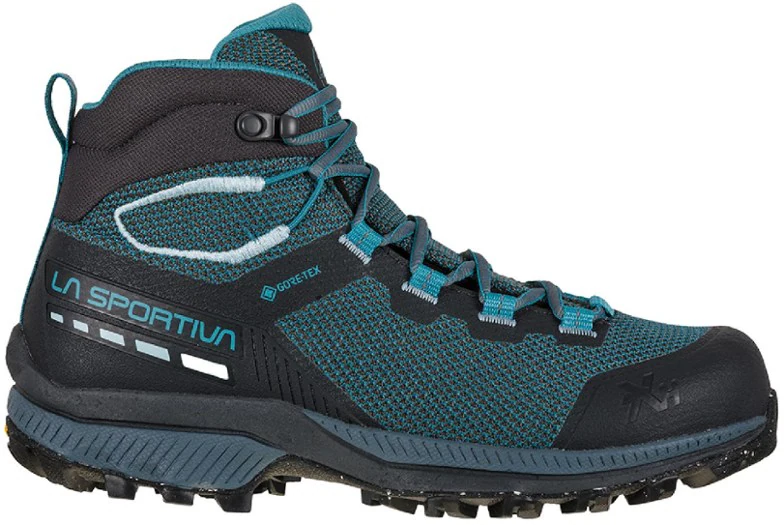
Weight: 28.6 oz
Upper Materials: Recycled air mesh
Lining: GORE-TEX
Outsole: Vibram Ecostep Evo
Pros: Comfortable, minimal break-in time
Cons: Wide fit could be bad for narrow feet
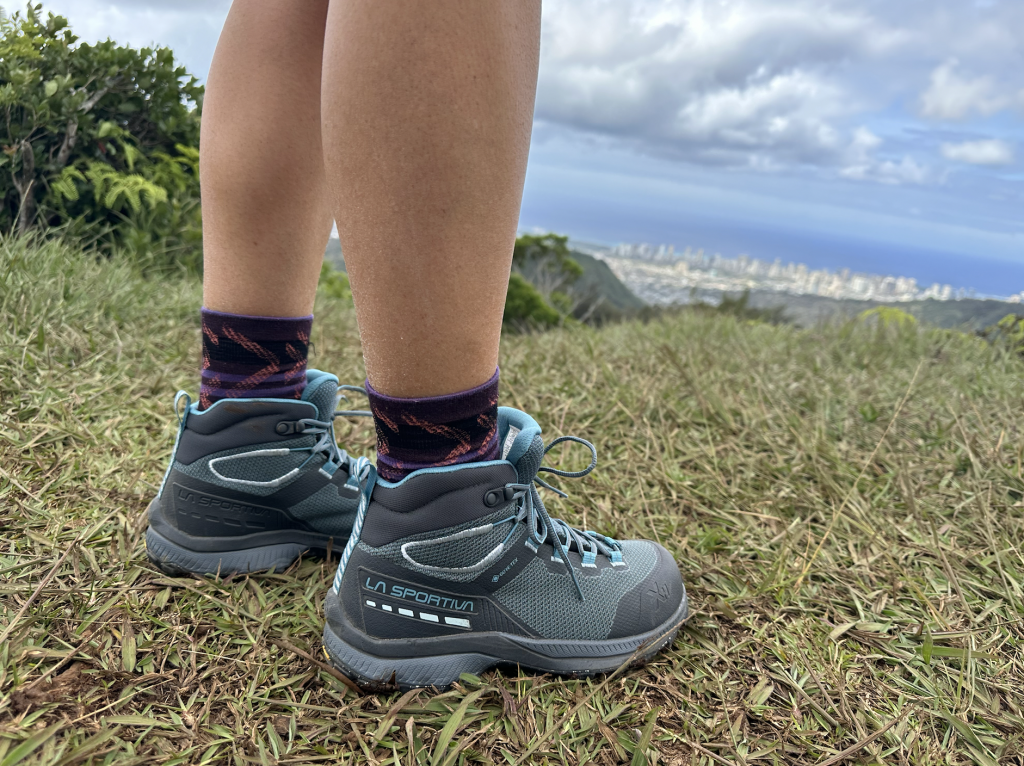
Numerous trusted sources recommended La Sportiva as making some of the comfiest boots in the game. So we knew we had to give them a try. We’re happy to say the TX Hike Mid GTX didn’t disappoint.
These boots were comfortable right out of the box and performed well from their first hike. They offered the perfect combination of comfort and support right away. Made with the environment in mind, these boots feature a 15% recycled EVA Midsole and a Vibram Ecostep Evo Outsole with 30% recycled content.
The mesh, laces, and webbing are made entirely from or utilize a percentage of recycled materials. Additionally, the Mid GTX has a bluesign-approved waterproof/breathable GORE-TEX lining. And seamless uppers have TPU overlays for added durability.
The Mid GTX sports a wide fit but performed well for our tester despite her narrow feet. The boots had plenty of cushion underfoot and the aggressive traction on the outsoles made it possible to navigate slippery and wet surfaces with ease. The break-in period was minimal and these boots provided all-day comfort on the trail — we see lots of thru-hikes in our future.
Read our full La Sportiva TX Hike Mid GTX review here.
Runner-Up Best Women’s Hiking Boots
Hoka Kaha 3 GTX ($240)
Weight: 33.6 oz
Upper Materials: Leather and GORE-TEX Invisible Fit footwear fabric with 71% recycled polyester face; quarter/tongue/lining: 100% recycled polyester mesh
Lining: 100% textile
Outsole: Vibram Megagrip 100% rubber
Pros: Good-looking, not overly stiff, easy break-in
Cons: Somewhat pricey, heavier than Kaha 2
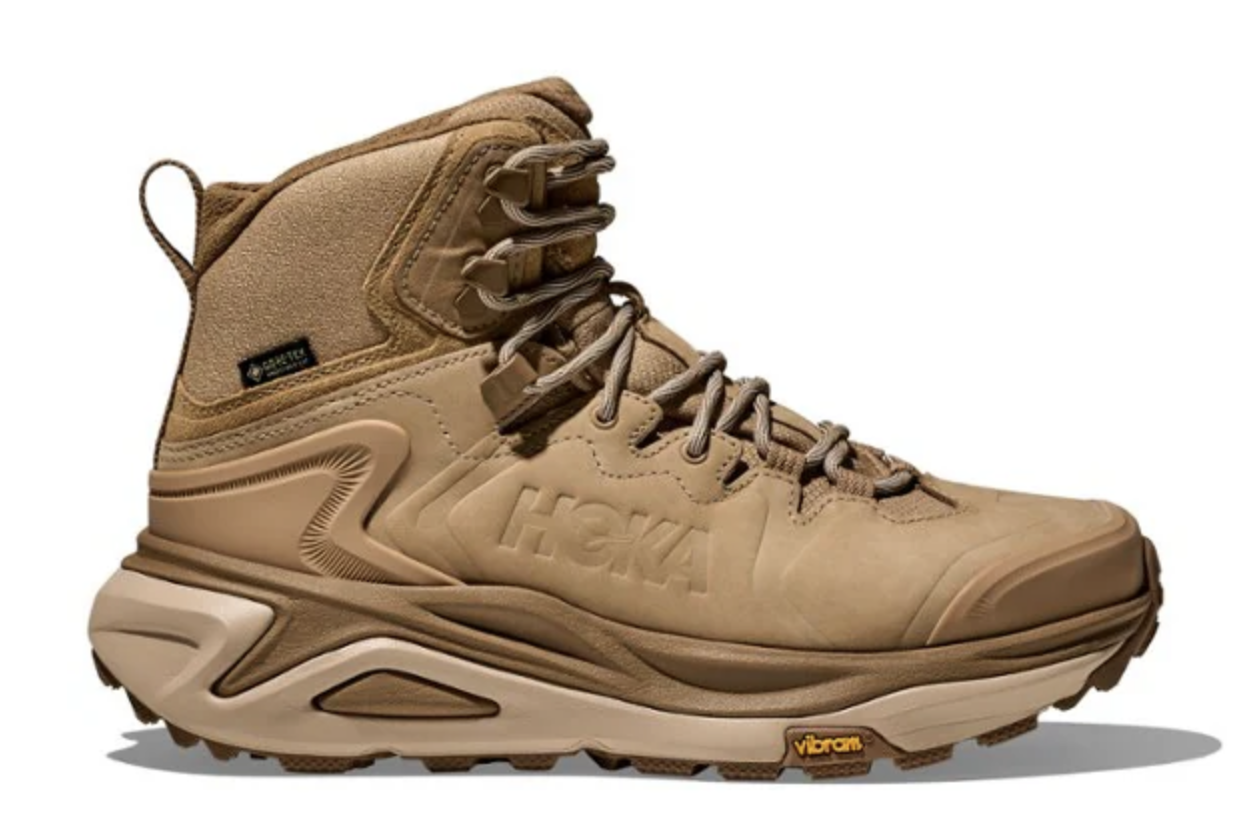
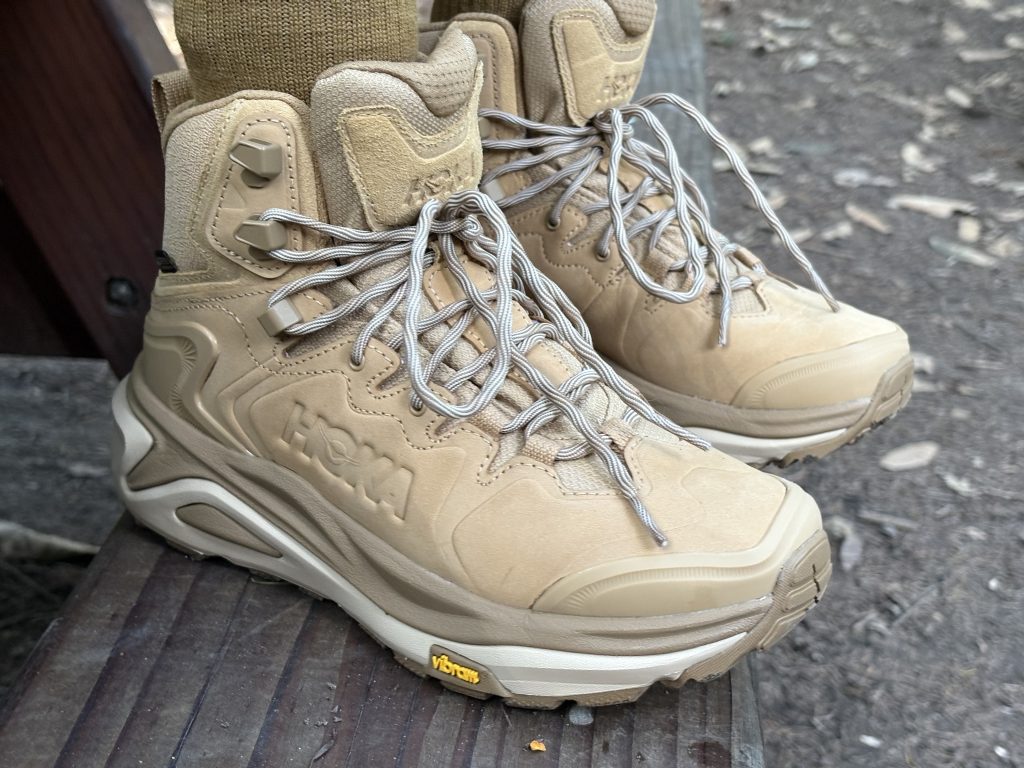
On the shelves, the Hoka Kaha 3 GTX hiking boots look like a beefy pair of boots. But once they’re on your feet, they’re surprisingly lightweight and pretty much as comfortable as hiking boots get.
Like most boots, the Kaha 3 GTX is a tad stiff out of the box, but after a few hikes, the leather loosens up and the midsoles really shine. The latest version looks even better than the previous Kaha 2. And even though the boots add a couple of ounces over the outgoing model, we found the all-around performance was worth the trade-off.
The Vibram MegaGrip outsole is better than ever, and this particular rubber compound felt super tacky, even on wet trails. While we often like hiking shoes or trail runners, the flexibility and midsole comfort of the Hoka Kaha 3 GTX has us choosing hiking boots more often.
Check out our full review of the Hoka Kaha 3 GTX here.
Best Value Hiking Boots for Women
Merrell Moab 3 Mid Waterproof ($170)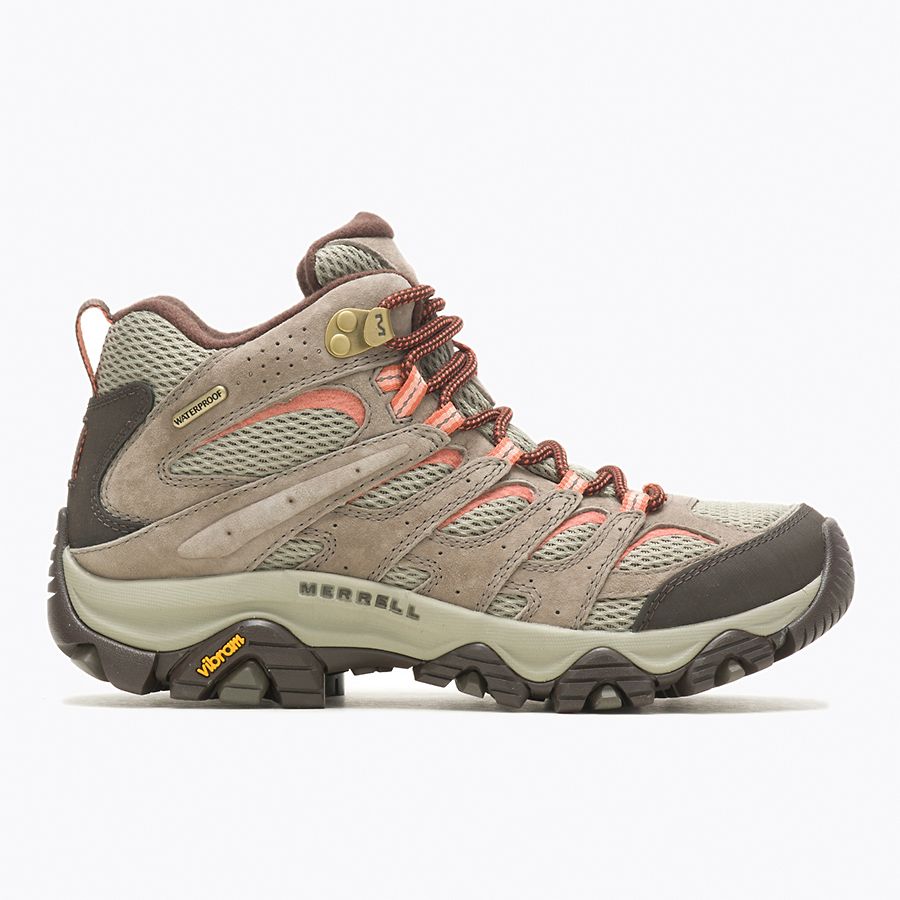
Weight: 32.8 oz
Upper Materials: Pigskin suede/mesh
Lining: Recycled mesh
Outsole: Vibram TC5+
Pros: Comfortable and breathable, made from recycled materials
Cons: Runs slightly small
The Moab 3 is an upgraded version of Merrell’s classic boot. Various versions of the Moab have been popular for more than 15 years, and this version is Merrell’s most eco-friendly boot to date. It features 100% recycled laces and webbing and a 100% recycled mesh lining.
Merrell checks all the boxes with the Moab 3: a waterproof membrane, a pig suede leather and breathable mesh upper, a bellows tongue that keeps out debris, an abrasion-resistant rubber heel and toe cap, a breathable mesh lining, and a removable contoured footbed with reinforced heel cushioning.
Other thoughtful features include the Merrell Air Cushion in the heel, which works to absorb shock and add stability; the Super Rebound Compound, which also helps absorb shock; and the Vibram TC5+ outsole, which provides reliable traction on all surfaces.
Our tester was ambitious and wore these for the first time on an all-day technical hike that included river crossings, climbing, and steep and muddy up and downhill sections. The Moab 3 performed wonderfully on all occasions. These hiking boots are comfortable, supportive, and breathable, making them a great sidekick for any hike. Our tester typically wears a size 8 in hiking boots but found that the 8.5 worked perfectly. So you may want to order a half size up if you prefer a little extra room.
Read our full review of the Merrell Moab 3 here.
Best Recraftable Women’s Hiking Boots
Danner Mountain 600 Leaf GTX ($250)
Weight: 36 oz
Upper Materials: Full-grain leather
Lining: Waterproof GORE-TEX and 100% recycled textiles
Outsole: Vibram Fuga
Pros: Quick to break in, recraftable
Cons: Minimal support in ankle collar
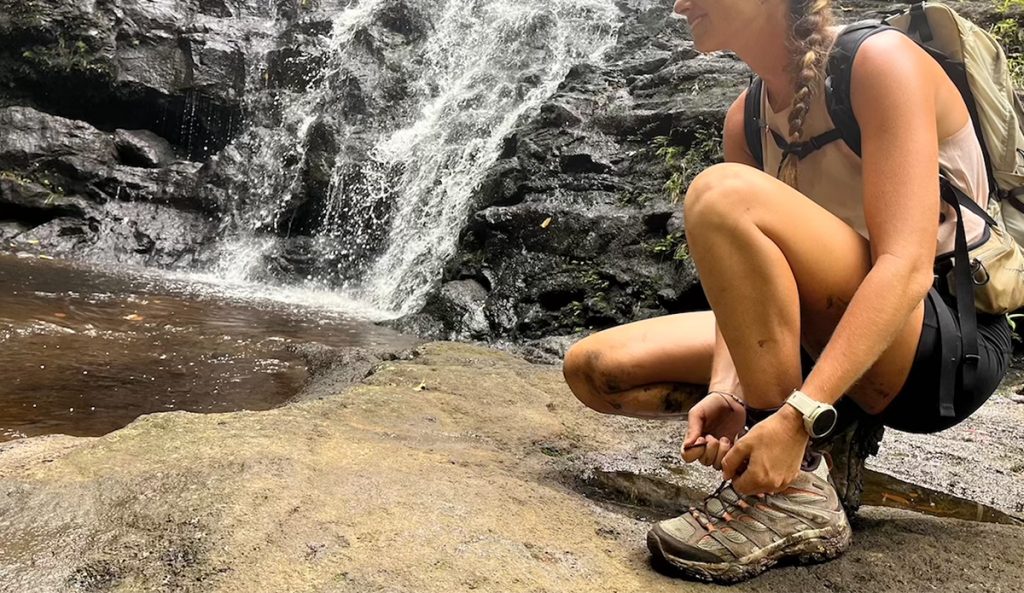
Leather boots can be stiff and unaccommodating, but the Danner Mountain 600 Leaf GTX boots are immediately soft, supple, and comfortable. The boots provided cushion and protection underfoot, even when we trekked over sharp rocks. But while one tester liked the flexibility of the boot, another said she wanted more support in the over-the-ankle collar for stability. “They moved with every step,” she said. It’s worth noting that this model is designed for light hiking and everyday wear rather than burly exploration.
We wore them on a hut-to-hut hiking trip in British Columbia, where we encountered every type of terrain, from slippery boulders to dirt trails to chossy ridges. The GORE-TEX liner kept our feet dry when we got too close to a waterfall to stay dry, and the Vibram Fuga outsole clung to the wet rock. We even tested their stickiness on a via Ferrata at Kicking Horse Mountain Resort, and they never once slipped from the iron rungs.
The Mountain 600 Leaf GTX is part of Danner’s Recraftable line, meaning once your pair wears out, you can send them to their workshop in Portland, Oregon for fresh rubber, leather refurbishing, new stitching and components, and other services to extend its lifetime.

Best New Boots We Tested
The North Face Offtrail LT Mid ($220)
Weight: 15.94 oz
Uppers: Synthetic, TPU
Waterproofing: GORE-TEX Waterproof Membrane
Lining: Textile
Outsole: TNF Surface CTRL
Pros: Great traction, minimal break-in period, supportive
Cons: Not many color/size options, lacing system could use some work
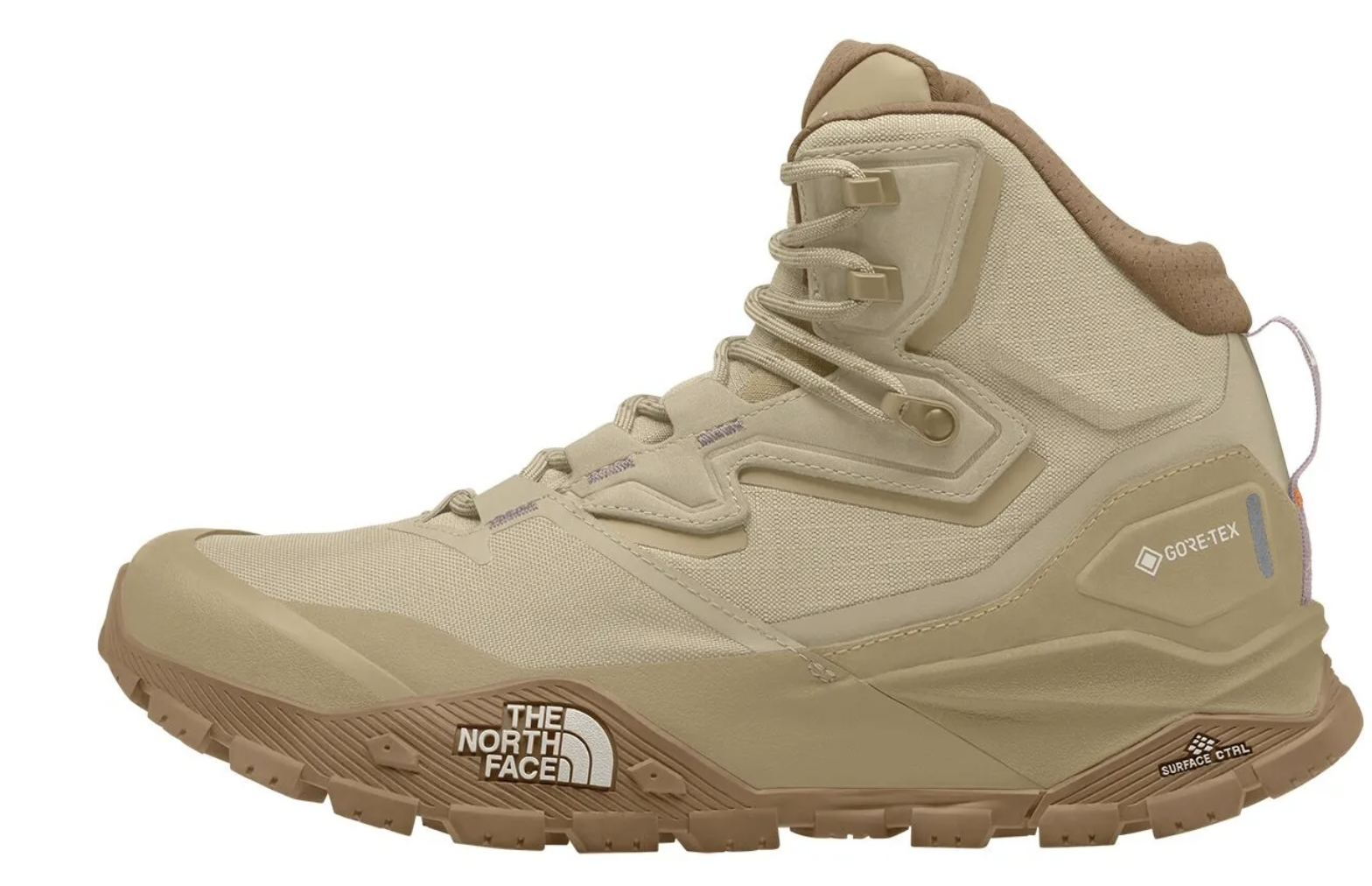
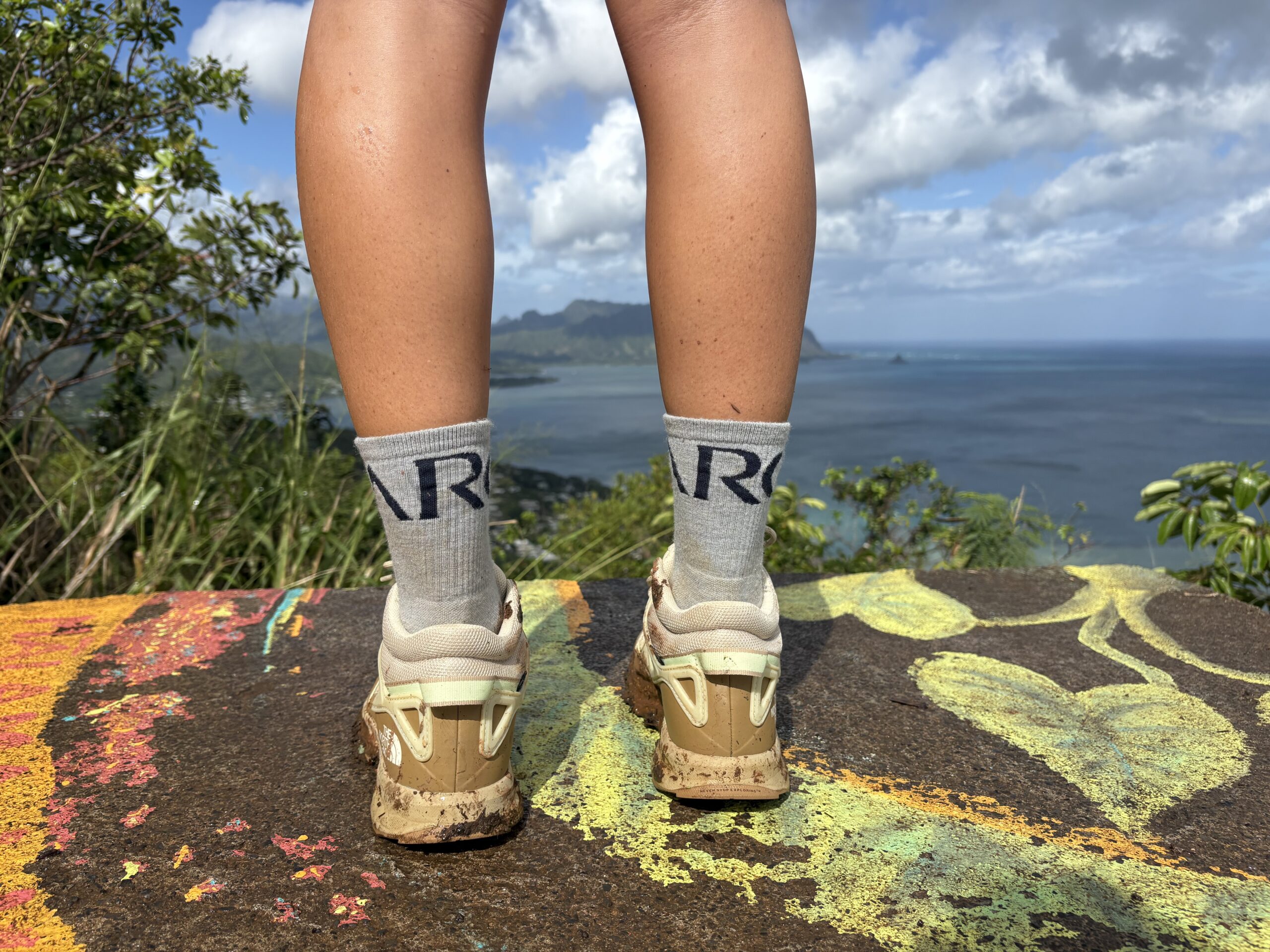
We’ve been super impressed with The North Face’s hiking boots and shoes lately, and the Offtrail LT Mid is our favorite of the bunch. With the lightweight profile and ready-to-wear design, these feel as approachable as a pair of trail runners, with all the stability and support you need for going on longer hikes. The wide platform underfoot and especially tacky outsole created a poised feel on a variety of terrain. We tested this on wet, muddy trails in Hawaii, and they provided excellent traction. It took a bit of work to dial in the lacing (especially if you have narrow feet), but overall, the Offtrail LT is super comfortable. Of all the new boots we’ve tested this season, The North Face Offtrail LT Mid is our top choice. It didn’t quite outpace our favorite, the La Spos above, but it came close at a very similar price.
Read our full review of The North Face Offtrail LT here.
Best of the Rest
Most Comfortable Women’s Hiking Boots
Hoka Anacapa 2 Mid GTX Hiking Boots ($195)
Weight: 29.4 oz
Upper Materials: Waterproof nubuck leather
Lining: Recycled mesh
Outsole: Vibram Megagrip rubber
Pros: No break-in period, soft sock liner
Cons: Minimal color options
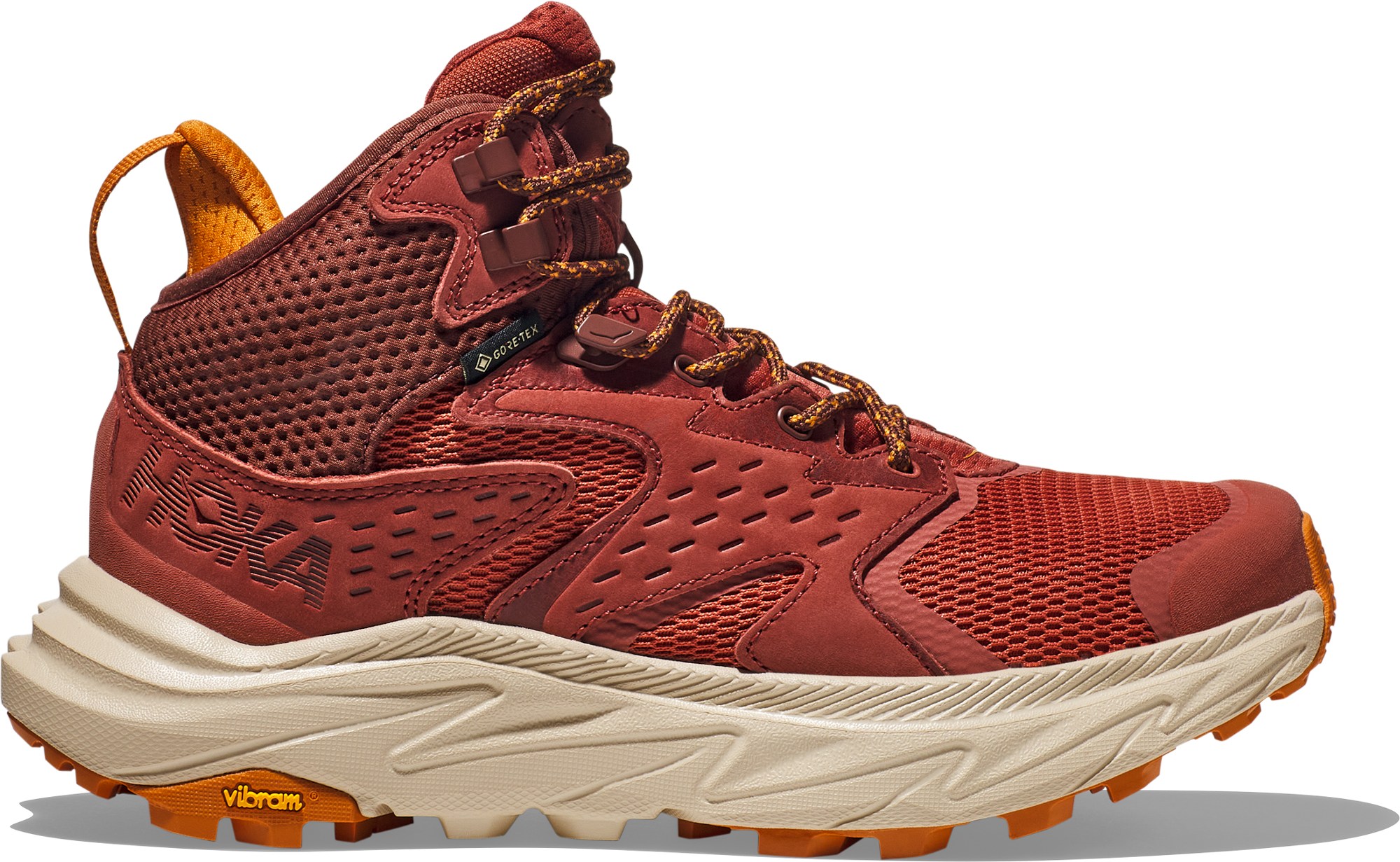
When it comes to the Hoka Anacapa 2 Mid GTX Hiking Boots comfort is the name of the game. Hoka is known for making running shoes but their boots are worthy as well. The Anacapa 2 boots provide the comfort of trail running shoes but with the support of hiking boots.
The Anacapa 2 boots have waterproof leather uppers as well as a waterproof GORE-TEX membrane while still remaining breathable. We found that they performed well in rain and on shallow stream crossings without getting too hot while hiking in the Hawaiian sunshine. The soybean-based sock liners feel soft against your feet and the Achilles heel comfort build helps you feel nice and supported. The toes have rubber caps to prevent bangs and the outsoles are grippy on all terrain. The Anacapa 2 is the perfect pair of hiking boots for folks who hate wearing boots. We only wish they came in more colors!
Best Women’s-Specific Design
Zamberlan Circe GTX ($280)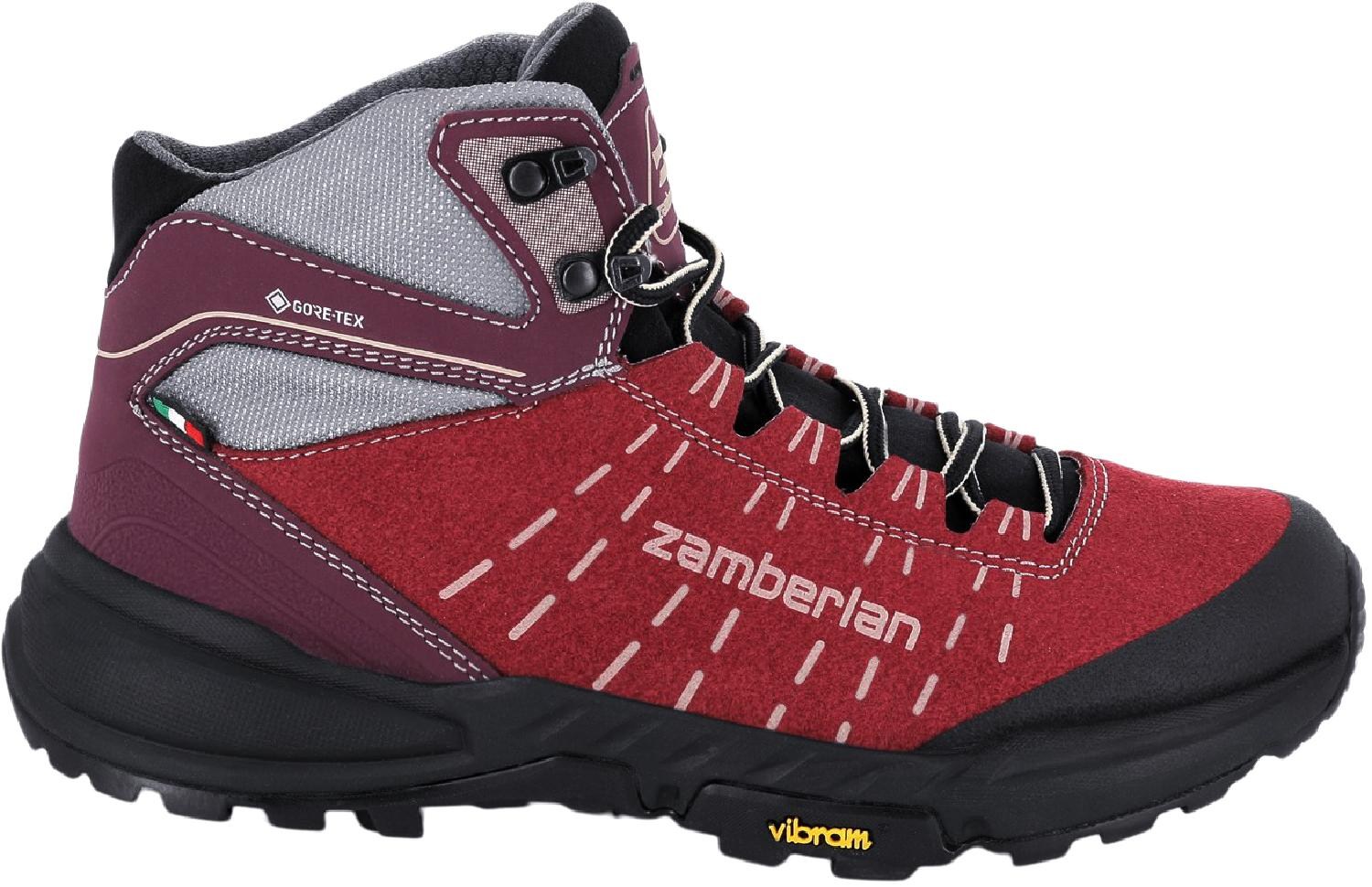
Weight: 28.2 oz
Upper Materials: Suede-effect and leather-free microfiber
Lining: Polyester
Outsole: Vibram Megagrip
Pros: Made specifically for women, Vibram Junko outsole
Cons: Insole feels a little weird at first
Made in Italy, the Zamberlan Circe GTX boots are lightweight yet supportive. Designed specifically for women, they boast an elasticized tongue for enhanced comfort. They also include a Vibram outsole with a wider heel and forefront for added stability, coupled with sticky rubber for secure traction.
Thoughtful features include PU rands to protect the toe box and uppers from debris, EVA midsole, PE insole, and a GORE-TEX waterproof/breathable membrane. The uppers and gussets are leather-free and instead sport a suede-effect microfiber.
The bottom insoles felt a little funky, but we’re sure they’ll get better with time, otherwise, we’ll add inserts for personalized comfort. Overall, these boots are comfy and well-made and come in fun color options to boot (pun intended).
Best Minimalist Hiking Boots
Xero Shoes Xcursion Fusion Hiking Boots ($150)
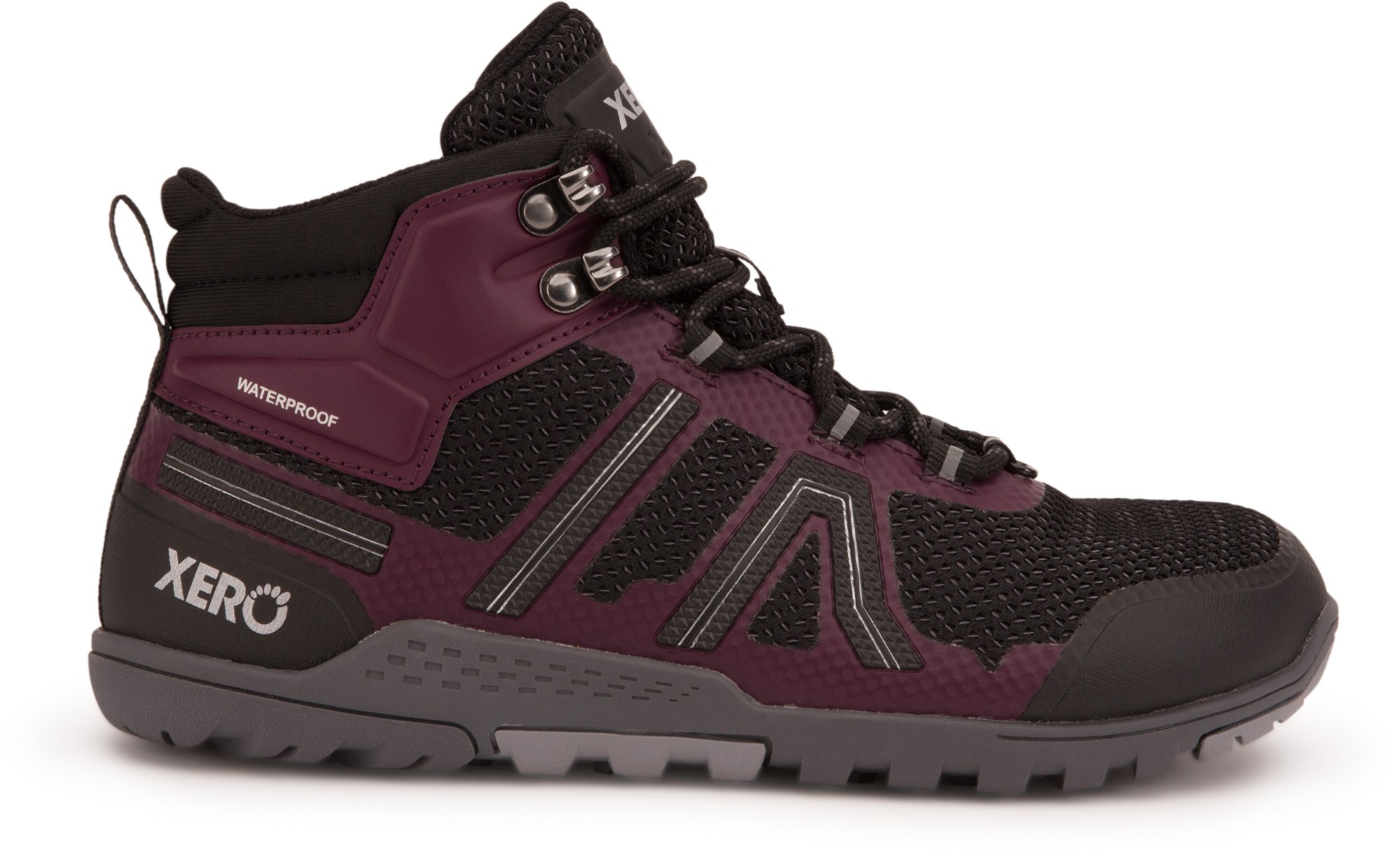
Weight: 20.4 oz
Upper Materials: Synthetic mesh/synthetic textile
Lining: Synthetic textile
Outsole: FeelTrue rubber
Pros: Lightweight, comfortable, built-in gaiter hooks
Cons: Not a lot of support
After a few hikes in the Xero Shoes Xcursion Fusion Hiking Boots, we still have mixed feelings about them. The boots are super lightweight and comfortable and almost feel like the Moon Boots you wear post-skiing. The Xcursion Fusion boots sport a wide toe box and a zero-drop (or, in their case, “xero drop”) design that allows toes to spread out naturally. While the wide toe-box is great for allowing the toes to relax, the Xcursion Fusion boots felt wide on our lead tester’s narrow feet, just like every other wide toe-box boot in this guide. Your mileage may vary.
We appreciated that these boots were made from vegan-friendly materials, had reinforced toe caps to protect from bumps against rocks, were waterproof, included built-in gaiter hooks, and provided reliable traction underfoot. Designed to offer a “barefoot feel,” these boots didn’t offer as much protection as other boots we reviewed. But if you’re a fan of ground feedback, the Xcursion Fusion boots could be right up your alley.
Best Durability for the Price
Oboz Sawtooth X Mid Waterproof Hiking Boots ($200)
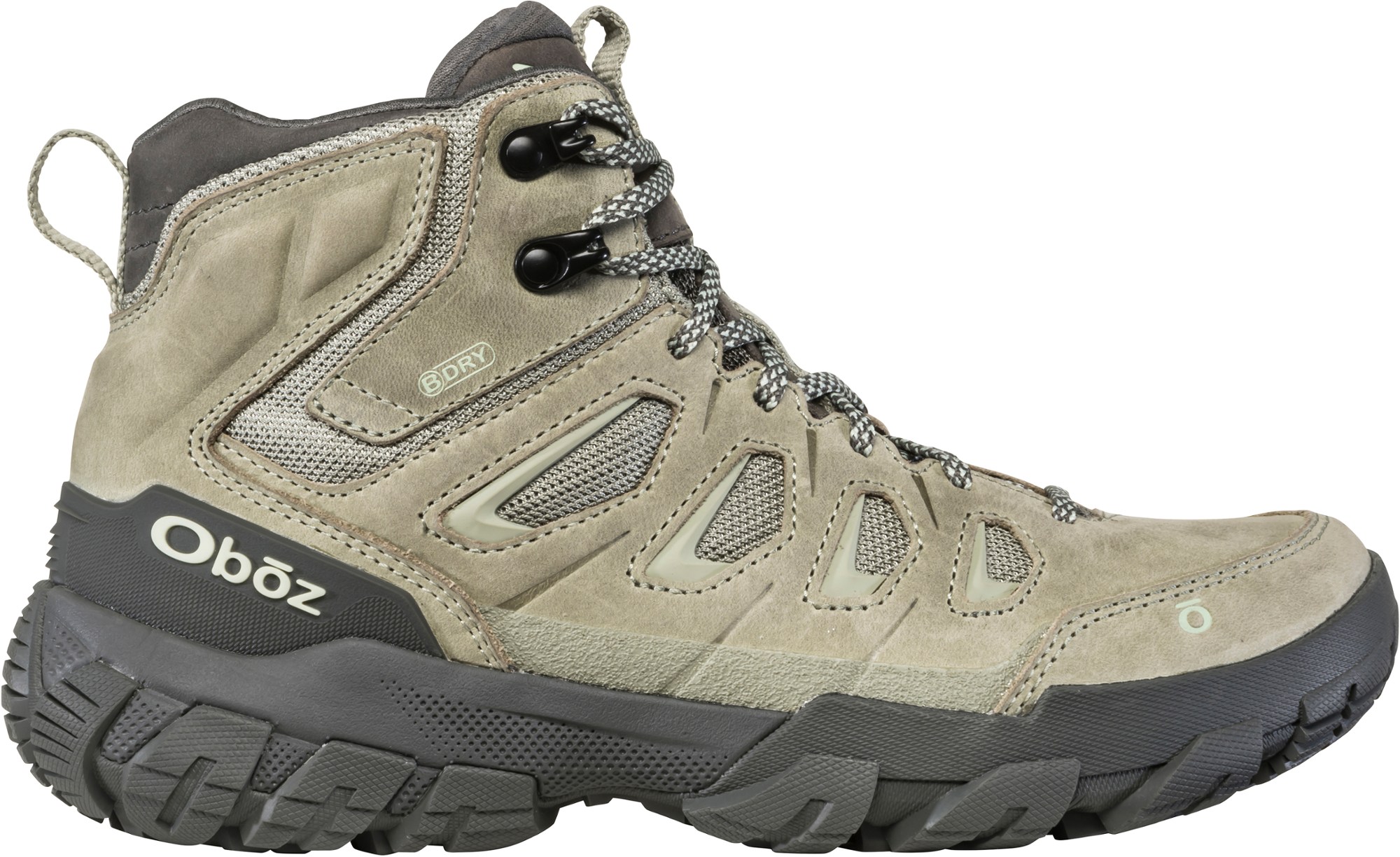
Weight: 32.6 oz
Upper Materials: Nubuck leather, CORDURA fabric mesh
Lining: B-DRY waterproof membrane
Outsole: True Tread rubber
Pros: Super durable, good for narrow feet
Cons: Need to be broken in, wide feet need not apply
Leather is the OG material for hiking boots. While it’s the most durable option, it usually comes at a cost to comfort. Like most leather boots, the Oboz Sawtooth X Mid Waterproof Hiking Boots require some time to break in, but after that, they’re comfortable enough. These boots fit true to size and were a great match for someone with narrow feet—hikers with wide feet may want to size up or consider a different model.
The Sawtooth X Mids were reliably waterproof, provided solid ankle support, and plenty of traction underfoot. Although they got more comfortable with time, they sometimes felt tight or uncomfortable in the toe-box, especially on downhill sections. Some complained that these boots weren’t breathable, but we didn’t encounter any issues with that, even when hiking in a humid, warm weather climate.
Women’s Hiking Boots Comparison Table
| Hiking Boot | Price | Weight (Pair) | Waterproofing | Upper | Outsole |
| La Sportiva TX Hike Mid GTX | $189 | 28.6 oz | Gore-Tex | Recycled air mesh | Vibram Ecostep Evo |
| Hoka Kaha 3 GTX | $240 | 33.6 oz | Gore-Tex | Waterproof nubuck leather | Vibram Megagrip |
| Merrell Moab 3 Mid Waterproof | $170 | 32.8 oz | Waterproof membrane | Pigskin leather/mesh | Vibram TC5+ |
| Danner Mountain 600 Leaf GTX | $250 | 36 oz | Gore-Tex | Full-grain leather | Vibram Fuga |
| The North Face Offtrail LT Mid | $220 | 31.9 oz | Gore-Tex | Syntetic, TPU | TNF Surface CTRL |
| Hoka Anacapa 2 Mid GTX Hiking Boots | $195 | 29.4 oz | Gore-Tex | Waterproof nubuck leather | Vibram Megagrip |
| Zamberlan Circe GTX | $280 | 28.2 oz | Gore-Tex | Suede-effect and leather-free microfiber | Vibram Megagrip |
| Xero Shoes Xcursion Fusion Hiking Boots | $150 | 20.4 oz | Waterproof membrane | Synthetic mesh/synthetic textile | FeelTrue rubber |
| Oboz Sawtooth X Mid Waterproof Hiking Boots | $200 | 32.6 oz | B-Dry waterproof membrane | Nubuck leather, CORDURA fabric mesh | True Tread rubber |

How We Tested Women’s Hiking Boots
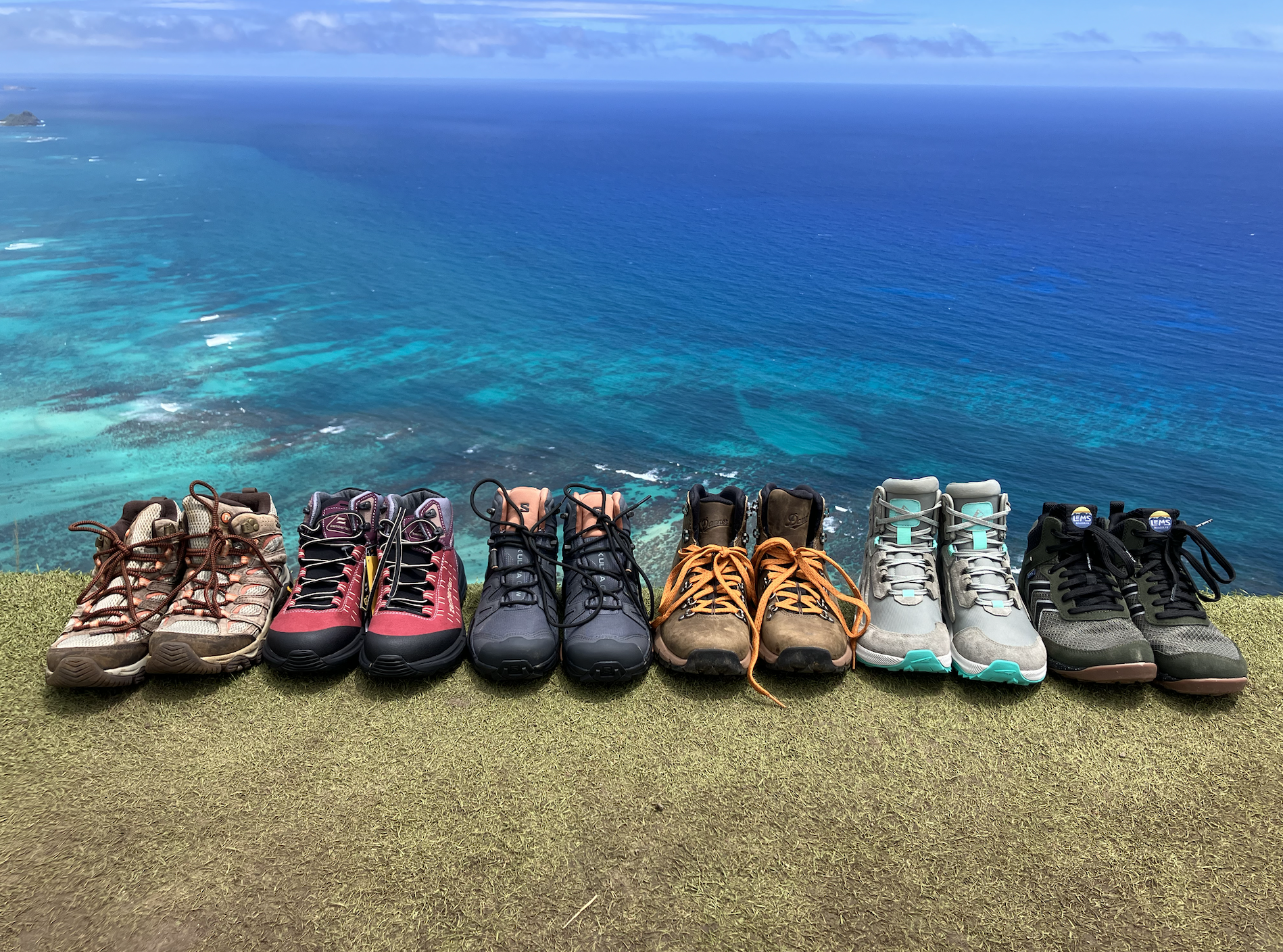
To test these boots, we went hiking, naturally! We tackled a variety of different terrains: wet, dry, flat, hilly, you name it. That said, the best hiking boots are ones that will last you for hundreds and hundreds of miles, so we’ll be keeping this review updated down the trail as these boots undergo continued testing.
Our lead tester, Rebecca Parsons, is no stranger to the trails. She’s done thru-hikes and day hikes in New Zealand, Iceland, Mexico, Fiji, Hawaii, Colorado, and California, and is always searching for her next adventure. Currently, she lives in Oahu, Hawaii, and is on a mission to do a new hike each month, as the island has hundreds of incredible trails to offer. For reference, Rebecca wears a women’s size 8, and her feet are on the narrow side.
Additionally, Amelia Arvesen took on testing for an update to this guide. An experienced hiker, she took on trails from British Columbia to Montana and along the Pacific Northwest. She tested pairs of women’s hiking boots on mountain trails, via Ferratas, and more.

Women’s Hiking Boots Buyer’s Guide
Hiking boots for women are comprised of pretty broad characteristics. In the buyer’s guide, we take a closer look at the different features of hiking boots and how you can decide what type of boots will work best for the hiking you do. From waterproofing to fit and comfort, we cover it all.
Hiking Boot Height
Low-Cut
Generally, low-cut hiking boots are more of a hiking shoe and less of a boot. They usually hit below the ankle, leaving your ankle exposed and unsupported. On the flipside, they offer plenty of freedom and flex and are generally the most comfortable option.
High-Ankle
High-ankle hiking boots offer the most ankle support but can also be the most bulky and cumbersome. As you’d expect, they typically hit a few inches above the ankle, with lacing running all the way up for a snug fit. High-ankle boots can also help keep water out during stream crossings or muddy conditions (so long as they are waterproof).
Mid-Rise
In our opinion, mid-rise hiking boots are the best-of-both-worlds option. They typically hit just above the ankle, providing ample ankle support and protection from mud and water. They tend to be more comfortable and flexible than their higher-cut counterparts.

What Makes a Good Hiking Boot for Women?
Comfort
When it comes to hiking boots, comfort is paramount. You’ll spend almost all your time in your hiking boots on your feet and moving. So you want a boot that is comfortable and won’t give you any issues after wearing it day in and day out, mile after mile.
Fit
Fit is essential for a positive hiking boot experience. An ill-fitted boot — whether too tight or too loose — could result in discomfort, blisters, or other injuries.
Although each person’s foot is shaped differently, here are some general guidelines to follow when shopping for hiking boots. You’ll want boots that fit fairly snugly around the top and sides of your foot, but that still have some room between your toes and the end of the toe box. On extended hiking and backpacking trips, feet tend to swell. If you have consecutive big mileage days in your future, go up half a size. If not, most of the boots in this guide fit true to size, except where noted.
If you’re unsure of your sizing, head into a store and get your foot sized by a pro.

Durability
A boot’s durability depends primarily on three factors: material choice, design, and construction quality. Look for brands with a history of quality construction, boots made of durable materials like leather or Cordura nylon, and design elements like extra stitching and other reinforcements. Some boots can be resoled or repaired by the manufacturer after they wear out.

The La Sportiva TX Hike Mid GTXs have everything you could want in a hiking boot. Made from recycled materials, they are lined with GORE-TEX, have plenty of cushioning underfoot, boast generous traction on the outsoles, and require little to no break-in time.
Support
The entire point of hiking boots is the support they provide. They’re not nearly as comfortable as their shoe counterparts, but a good pair of hiking boots will provide generous ankle support and keep your feet protected to help you stay injury-free. As mentioned earlier, low-cut boots offer the least amount of ankle support, while high-cut boots offer the most, with mid-rise boots falling smack dab in the middle. If you don’t love a ton of ankle support, it might be best to opt for hiking shoes, instead.
In addition to ankle support, you’ll want to look for arch support. As you hike, your feet and your arch tend to fatigue. This, in turn, can lead to overuse injuries, so it’s important to look for a boot that has plenty of arch support, especially if your arches fatigue easily. Another option is to add inserts into your boots for additional support. Superfeet is one of our favorite inserts.

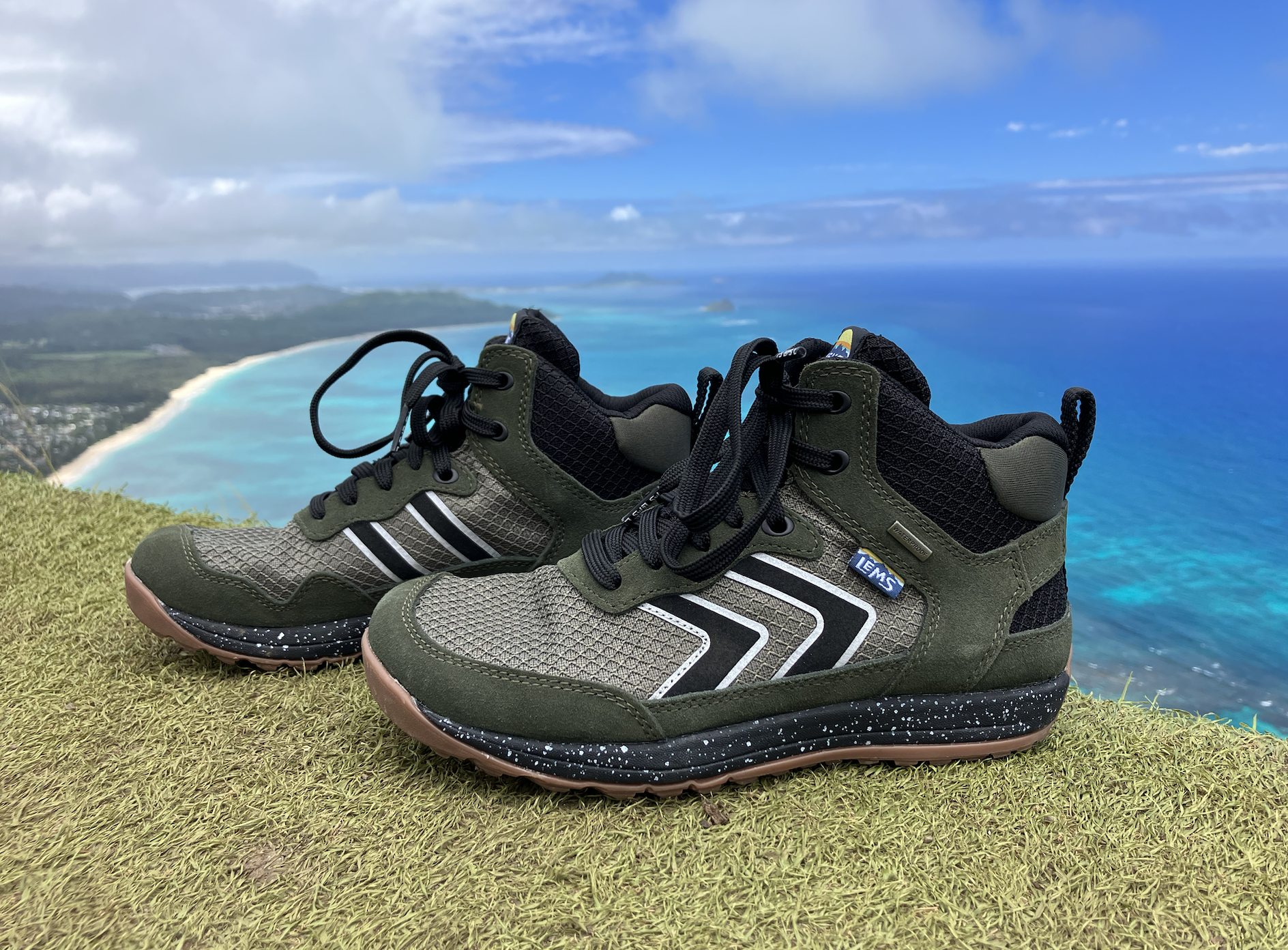
We’d be remiss if we didn’t point out that there’s an entire philosophy that stands in direct opposition to everything we just said. Advocates of minimalist footwear recommend flexibility and ankle strength over artificial ankle support and flat footbeds over exaggerated arch support. Boots in these categories (like examples from Lems and Xero Shoes) tend to be considerably lighter — and less weight swinging on the end of the pendulums that comprise your legs equals less fatigue on big-mile days. This argument’s been going on for a while and shows no signs of stopping, so your best bet is to try boots on either side of the aisle and make your decision based on experience.

Other Hiking Boots Considerations
Waterproof Hiking Boots
When buying a pair of hiking boots, we take into consideration whether they are waterproof. Although everyone isn’t after a waterproof pair of boots, it’s something that is important to us because we want our feet and socks to stay as dry as possible. However, waterproofing tends to make boots less breathable and, therefore, hotter, so if you live in a warm, dry region, you’re probably best to do without.
Waterproof membranes also take forever to dry out once they do soak through — and thru-hikers on wet trails like the Appalachian Trail will tell you that even the most waterproof of boots fail given enough days in the rain. Some hikers prefer non-waterproof boots because they dry more quickly. Once again, your mileage may vary.

How To Waterproof Your Hiking Boots
These days, most waterproof boots arrive at your door ready to roll, thanks to a combination of waterproof/breathable membranes and material treatments applied at the factory. But if you happen to have a pair of non-waterproof full-grain or split leather boots and want to waterproof them, you can. Just head to your local outdoor store and buy a bottle of leather treatment, or see what your boot’s maker recommends. After you’ve picked the appropriate waterproofing, clean your boots and apply the waterproofing treatment. Finally, dry your boots and store them in a clean, dry space.

Weight
Hiking boots tend to be heavier than shoes, but weight varies from brand to brand. A heavier, chunkier boot will likely offer more support, whereas a lighter boot may feel more comfortable and springier. There is no wrong choice, but it’s something to factor into your decision (see our discussion on support and minimalism, above). The boots we tested varied quite a bit in weight – take a look at our Comparison Table to see how they stacked up against one another.
Breathability
When you hike, your feet are bound to warm up, even if you’re hiking in a cooler climate. A good pair of boots is both waterproof and breathable. Naturally, waterproof boots aren’t going to be as breathable as non-waterproof ones, but waterproofing technology has come an impressively long way.
For folks who hike in warmer, drier areas, a non-waterproof boot is definitely going to be more breathable and will probably be your best bet. You’ll want to make sure that the boots offer ventilation so your feet don’t overheat during your trek. We were super impressed with the Lems Primal Pursuit Mid Waterproof and the Merrel Moab 3 Mid Waterproof for being both waterproof and breathable.
Heel-Toe Drop
Drop refers to the difference between the height of your heel and the height of your forefoot while wearing shoes. Drop varies between brands and models. We prefer a lower heel for stability, but others may like a higher heel for the added cushion it provides.
“Zero-drop” boots are exactly what they sound like — boots with no difference between heel and forefoot. Advocates of this type of shoe claim it leads to maximum stability and the most natural stride. Drop height should be noted on the box or the website, so take a look if it’s important to you.

Laces
Laces may be something that you wouldn’t think to factor in when looking for a new pair of boots, but they can make a big difference when it comes to fit and comfort. If your boots come with a cheap pair of laces, an easy fix is to swap them out for a pair of more heavy-duty ones. If the issue lies in the lacing system itself and you aren’t able to cinch the laces to get the boot snug around your feet, then you might want to consider a different pair of boots.

Traction
Traction is an important feature of hiking boots. Without trail testing your boots, the best way to determine if they have reliable traction is to check out the outsoles. The tread on the outsoles is referred to as lugs.
Deep, widely spaced lugs are ideal for muddy and uneven terrain whereas shallow, close-together lugs work well on hard-packed terrain. The type of rubber used for the outsoles plays a role in their grip as well. Softer rubber tends to have better grip but it’s also less durable than harder rubber.
Additional Features
Some boots include a few extra features, such as a toe or heel cap for added protection. Other boots come with attachment points for gaiters, which can be helpful in wet and snowy regions. A number of the boots on our list were made from recycled materials, which is a huge plus for the eco-conscious among us.
Maintenance
Like most gear, the life of your boots depends on how well you maintain them. After each use, be sure to rinse your boots in freshwater. Use a brush (an old toothbrush works great) to scrub the outsoles and all the nooks and crannies. Let your boots air dry out of direct sunlight. If the boots have an insole, remove it and let it dry separately. Finally, if your boots are leather, it can be helpful to periodically apply a conditioner or leather treatment.

Hiking Boot Materials
Materials are something to consider before you purchase a pair of hiking boots, as they affect comfort, durability, and waterproofing. For example, leather tends to be the most durable option, but can also be less breathable and less comfortable. On the flip side, synthetic materials can be more comfortable, breathable, and lighter, but they typically don’t withstand the test of time as well as leather.
Upper Materials
As the name suggests, the “upper” is the top part of the shoe — the fabric that connects to the rubber outsole. Traditionally, several different materials are used for the upper: synthetic nylon, mesh, Nubuck leather, suede leather, and full-grain leather.
Synthetic nylon and mesh are both known for their breathability and lightweight, but not their durability – but those materials don’t last as long as leather. Nubuck is made of full-grain leather but has a suede-like feel. It’s lighter, softer, and more breathable than most leather, but it’s not quite as durable. Full-grain leather is used on tough, heavy-duty boots. Full-grain leather isn’t as light or breathable, but it is durable and waterproof.
Midsole Materials
The midsole is one of the most important parts of a boot’s construction because it absorbs shock and impact while simultaneously adding another layer of protection from the ground. Most midsoles are made from EVA foam, PU, or a combination of the two. EVA is soft and cushy and can be found in most light and mid-weight boots. PU is a more durable foam, lasts longer, and can handle heavier loads, but it’s not quite as cushy as EVA. Also, PU has a tendency to break down if you don’t use your boots — if you are an infrequent hiker a boot with EVA is probably a safer choice.

Outsole Materials
The outsole is one of the most important parts of the boot, especially when navigating challenging terrain. Vibram is one of the top outsole manufacturers and makes a quality product. When buying new boots, take a look at the lugs underfoot: Some offer aggressive tread for muddy conditions, others offer sturdy rubber for hard-packed conditions, and others have more sticky rubber for scrambling or slippery boulders.
Return to Comparison Table | Return to Top Picks
Editor’s Note: For more camping and hiking gear reviews, click here. Or, check out the gear categories we cover. For our most recent gear coverage, click here.

Toe the Line: The Best Hiking Sandals