
In March, Oahu was absolutely hammered by a series of Kona low storms. The rain was relentless. The North Shore flooded, as did other parts of Oahu and the Hawaiian Islands. In the wake, with cleanup still actively underway, state officials said that the storms caused some $1 billion in damages.
When it rains in Hawaii, it pours. It’s generally a pleasant enough rain — warm at least — but the storms that hit in March were anything but pleasant. Data compiled by the University of Hawaii at Manoa shows more than two trillion gallons of rain fell across Hawaii in March. That’s enough to fill somewhere around three million Olympic-sized pools, according to Hawaii News Now.
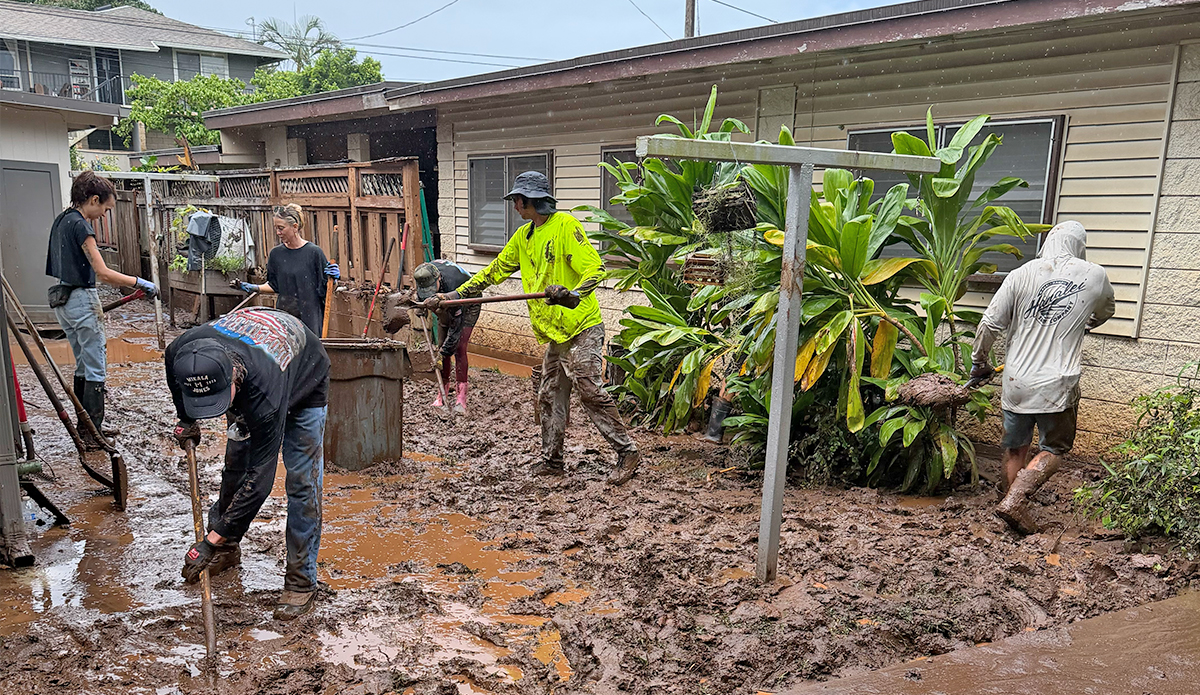
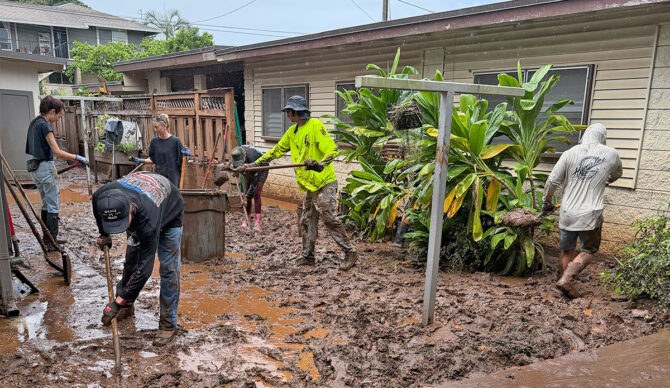
“It’s a disaster zone,” Jamie Mitchell told The Inertia in the early stages of the cleanup efforts. “Houses are flooded. There’s the thickest, gnarliest mud you can think of that ran through houses, all through backyards.”
When the skies began to open up as the brunt of the storms passed, it was clear that the damage was catastrophic. Homes were ruined. Mud was everywhere. It’s a long road ahead for many in Hawaii, but thankfully, no fatalities were reported.
“There were camps that had to be rescued, people were trapped by the water,” Governor Josh Green told Hawaii News Now. “The coast guard also pulled people off of debris out in the ocean.”
Now that the focus has shifted away from saving people and switched to repair, it’s becoming clear that it’s a lot more than a drop in a bucket. A billion dollars isn’t an amount of money that is just sitting around in the state coffers. Running a balanced budget is hard enough as it is, but when you tack on $1 billion in unexpected damages, well, you’ve got to do some figuring.
According to Green, the state is using emergency funds, as well as lifting budget restrictions that should make around $175 million available for at least some of what needs to be done. But with everything happening in the United States right now, things are uncertain. Resources are limited and the hoops of federal funding are a tricky thing to navigate.
“I trust the House and Senate to give me a great budget. We still do have Rainy Day funds, which I absolutely will use if it’s the desire of the whole state,” said Green to KHON2. “Given the boulders that came down and the flash floods that went up, including even in Manoa, I’m grateful for everyone’s work to keep people alive, but now we have to work with the feds to make sure that we get all the resources we can.”
House Finance Chair Chris Todd explained where all the money will likely be spent. “Todd said lawmakers are looking at tens of millions in immediate aid, hundreds of millions in short-term recovery, and long-term investments to prevent future disasters,” KHON2 wrote. “That includes strengthening infrastructure, as well as using funding streams like the state’s ‘Green Fee’ for climate resilience projects.”
The “Green Fee” as Todd explained it, is a way to prepare for the future.
“That’s one of the intents of setting up the ‘Green Fee’: to try our best to put systems in place, to put infrastructure in place that helps prevent future disasters,” he explained. “So this seems like a good time to kind of re-examine that and really put something forward that is going to prevent the next problem from happening.”
To get more specific, according to the office of the governor, it’s an increased taxation on visitors. “Starting January 1, 2026, Hawaii implemented a new ‘Green Fee’ (Act 96), adding a 0.75% increase to the Transient Accommodations Tax (TAT) on hotel and vacation rentals to fund environmental protection. This fee aims to raise $100 million annually for coastal restoration, wildfire mitigation, and sustainable tourism.”
Repairs are ongoing at the time of this writing, and they will be for quite some time. Some schools are unsafe. Roads are still washed out. It’s a mess, but the people who call Hawaii home are fighting to take it back. And they will — but it’s going to take time, work, and a whole lot of money.